Clear language, not a verdict
The right book can help you notice repeated denial, blame, contradiction, or confusion without insisting that it knows every detail of your relationship better than you do.
Why You Felt Crazy
When you have replayed a conversation until you are no longer sure what happened, the right book can be a quiet place to begin. It can offer language for the doubt, denial, and confusion without asking you to explain yourself perfectly or decide what comes next.
Survivor-written language, a private pace, and no requirement to have every answer.

When you need language
Looking for books on gaslighting often begins with a feeling that is hard to hold onto. Maybe you remember a conversation clearly, then someone tells you it never happened that way. Maybe you keep being called too sensitive, forgetful, dramatic, or difficult until your own reaction starts to feel like the problem. Maybe the details change so often that you have started to question whether you are allowed to trust your memory at all.
A helpful book cannot settle every question about a relationship. What it can do is give you a calmer frame for the patterns that have been difficult to name. It can make room for the fact that you may still care about someone, still feel unsure, or still be trying to understand what happened. Recognition does not have to become a decision on the same day.
That is why a book can be a meaningful first step. You can read privately, return to one page, or set it down when you have had enough. The aim is not to make your story more dramatic. It is to help your own experience stop disappearing every time somebody else tells it differently.
What to look for
A useful read offers perspective without becoming another voice that tells you what you should feel, remember, or do.
The right book can help you notice repeated denial, blame, contradiction, or confusion without insisting that it knows every detail of your relationship better than you do.
A useful read does not make missing someone, hoping for change, or taking time to understand mean that the harm was not real. Those feelings can exist alongside what you know.
Look for writing you can read privately, pause when you need to, and return to later. You do not owe anyone a finished conclusion because a page helped something make sense.
The strongest books bring the focus back to your experience: what happened, how it felt, what kept repeating, and what you need in order to feel steadier.
This may be a useful place to start when you are...
Why You Felt Crazy
Why You Felt Crazy is written for the part of you that knows something was wrong but has not been able to make the story stay still. Quinn writes from lived experience, not from a safe distance or a finished ending. The book stays close to the confusion that can follow when you are blamed, contradicted, minimized, or asked to carry someone else’s version of reality.
It does not tell you what your relationship is, what you need to call it, or what you need to do next. Instead, it gives language for the self-doubt that grows when your memory and reactions have been repeatedly challenged. It makes room for the parts that can feel hardest to admit: still caring, going back, missing good moments, or not feeling ready to act on what you have started to notice.
That lived perspective is the reason the book can feel different from a distant explanation of gaslighting. You are not asked to become certain before you are allowed to be curious. You are not asked to turn your life into evidence. You are invited to notice what happens inside you when your experience has been questioned for too long, then come back to yourself a little at a time.
Read it slowly. Keep only the words that help. Skip what does not feel right yet. If the book gives you a sentence that feels familiar, that can be enough for the day. The value is not in reaching a perfect conclusion. It is in having a place where your own perspective can exist without being corrected, debated, or hurried.
Choose your next small step
Reading may be all you need right now. If you later want a private way to hold onto what you notice, Quinn’s guided journal is there.
Begin with survivor-written language for the denial, self-doubt, and emotional whiplash that can follow gaslighting.
Explore Why You Felt Crazy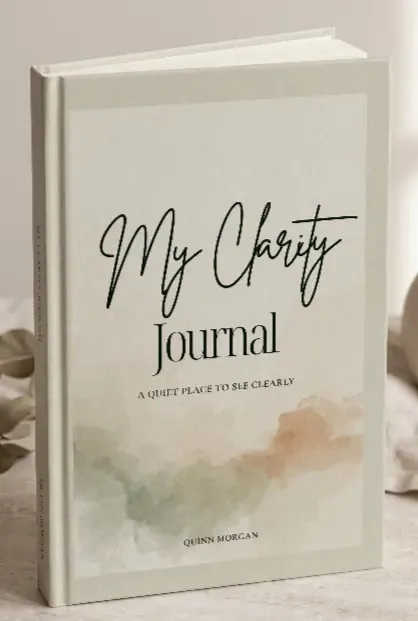
When you need space for facts, feelings, and repeated patterns, My Clarity Journal offers guided room to write at your own pace.
Explore My Clarity JournalRead in a way that protects your peace
Some pages may feel relieving because they name something you have carried alone. Others may bring up fear, grief, anger, or a feeling you cannot explain yet. None of that means you are reading the wrong way. Let yourself stop before you feel overwhelmed, and come back only when you want to.
If someone checks your belongings, devices, email, or browsing history, put safety first. You do not need to keep notes, confront anyone, or leave a book where it could create more risk. Choose the option that feels safest in your circumstances. The book is a private tool for reflection, not a test you need to complete.
When you want another quiet step, Quinn’s guide to gaslighting and genuine forgetfulness, Emotional Abuse Checklist, and support page can help you continue at a pace that feels more manageable.
Frequently asked questions
Good books on gaslighting give you language for repeated denial, blame, changing stories, and self-doubt without rushing you to label your life or make a decision. Why You Felt Crazy is a survivor-written place to start when you need that kind of calm recognition.
You can read at your own pace and take only what feels useful. A book cannot know your safety or circumstances, so it should never pressure you to confront someone, keep notes, or make a decision. Put safety first if privacy is a concern.
A book cannot prove your experience for you, and you do not need a book to give you permission to pay attention to what felt wrong. It can give you language and perspective when someone else’s version of events has made it hard to trust your own.
Start with the free first chapter of Why You Felt Crazy. One page, one phrase, or one moment of recognition can be enough for today. You can return when you want to, with no pressure to continue before you are ready.
Your clarity matters
Begin with the first chapter free, then take only the next step that feels useful to you.
Read the first chapter free