Language that feels recognizable
A useful book helps you name the parts of the relationship that have been hard to explain, without making you defend every detail before your experience can matter.
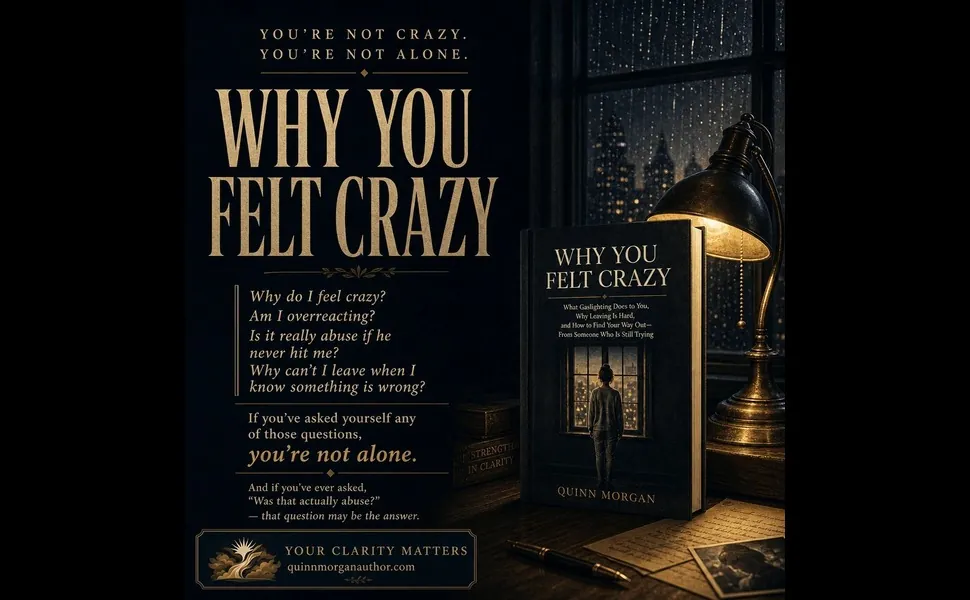
Why You Felt Crazy
You may be looking for a book because you are tired of replaying the same conversations, wondering why you still miss someone who hurt you, or trying to understand why you no longer trust yourself. The right words can be a quieter place to begin.
Survivor-written language, a private pace, and no pressure to have every answer today.
When you need a place to begin
Looking for a narcissistic abuse recovery book can be a very private search. You may not be ready to tell anyone what has been happening. You may not be sure that narcissistic abuse is the language that fits. You may only know that you have spent too long feeling confused, careful, guilty, or unlike yourself.
The right book does not need to settle every question for you. It can give you language for the parts of the relationship that became difficult to hold onto: the arguments that ended with you apologizing, the promises that made you hope again, the explanations that made you question your memory, and the loneliness of trying to make sense of it alone.
That is why the best choice is not always the loudest or most certain one. It is the book that helps you feel more grounded in your own experience, with room to pause whenever you need to.
What to look for
Recovery reading should offer clarity without asking you to turn a complicated experience into a simple story.
A useful book helps you name the parts of the relationship that have been hard to explain, without making you defend every detail before your experience can matter.
The best fit does not treat missing someone, hoping for change, or taking time to understand as proof that the harm was not real.
Look for a book that gives you perspective without turning your reading into a deadline, diagnosis, or set of instructions for your life.
You may need only one chapter, one phrase, or one moment of recognition. A book should let you take what helps and set it down when you have had enough.
A simple way to choose
You do not need to find the perfect book. You only need a place that feels steady enough to begin.
The best books for narcissistic abuse recovery do not demand that you be certain about every detail, label, or next step before your experience deserves care.
Look for language that helps you notice what kept repeating, rather than a voice that tells you what your relationship was or what you must do about it.
A helpful book lets you start with one chapter, pause whenever you need to, and choose the next step only when it feels safe and useful.
This may be the right place to start when you are...
Why You Felt Crazy
Why You Felt Crazy is written for the part of you that knows something was wrong but has not been able to make the story sit still. It does not ask you to prove a label, confront anyone, or explain why you have not made a clean break. Instead, it stays with the emotional aftermath that can be hardest to describe.
Quinn writes about the self-doubt that follows when your reality has been questioned, the guilt of still caring about someone who hurt you, and the exhausting work of trying to keep the peace while becoming smaller inside a relationship. It is a survivor-written book, not a distant explanation of what recovery should look like.
That perspective matters when you are still sorting through the contradictions. You can recognize a pattern and still miss the person. You can want clarity and still feel afraid of what it might mean. You can read one chapter without making it a decision about your whole life. The book makes room for those truths instead of treating them as a failure to recover correctly.
It is also built for a private pace. Read a few pages, return to a line that felt familiar, or set it down when you have enough for the day. You are not required to finish quickly, tell anyone what you read, or turn your experience into evidence for somebody else. The point is not to get the perfect answer. It is to have words that help you hear yourself again.
Choose the next small step
Reading can be enough for today. When you want a little more space to keep hold of what you notice, Quinn’s private tools are there.
Begin with survivor-written language for the confusion, self-doubt, and changing reality that can follow narcissistic abuse.
Explore Why You Felt Crazy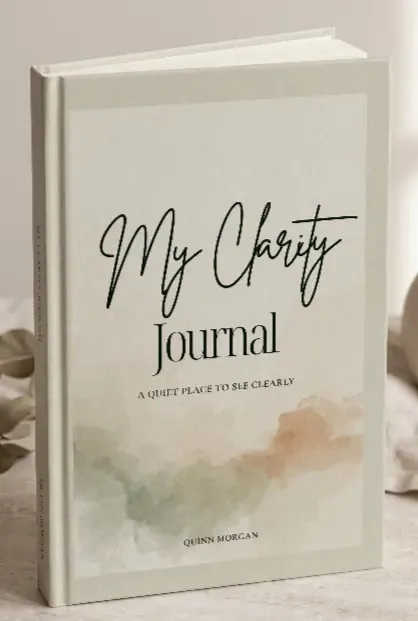
When you need more space than a page in a book, My Clarity Journal gives you guided room for facts, feelings, and the patterns you do not want to lose.
Explore My Clarity JournalRead in a way that protects your peace
Some pages may bring relief because they name something you have been carrying alone. Others may bring up anger, grief, fear, or a feeling you cannot place yet. None of those reactions mean you are doing it wrong. They can be a sign that you have reached a part of the story that deserves gentleness.
Try reading in smaller pieces. Keep only the sentence that stays with you. Let yourself stop before you feel overwhelmed. If it is not safe to keep a book, notes, or browsing history private, choose the option that creates the least risk in your situation. A book can support reflection, but your safety matters more than finishing a chapter.
When you are ready for another quiet step, you can pair the book with Quinn’s Emotional Abuse Checklist, a guide to gaslighting and genuine forgetfulness, or the My Clarity Journal. Each gives you a different way to return to what you know without forcing a timeline.
Frequently asked questions
The best book is the one that helps you understand what changed in you without shaming you for the parts that still feel complicated. Why You Felt Crazy is a strong place to start when you need survivor-written language for self-doubt, gaslighting, emotional abuse, and the difficulty of leaving.
You can read privately and at your own pace. A book can help you notice patterns and find language, but it cannot know your circumstances or safety. Use only what feels safe, and do not feel pressured to keep notes, confront anyone, or make a decision because of what you read. You can also visit Quinn's support page for a quieter next step.
A book cannot prove your experience for you, but the right words can make it easier to recognize patterns, hold onto what you felt, and return to your own perspective when the story has started to feel blurred.
Start smaller. Quinn offers the first chapter of Why You Felt Crazy free, so you can see whether the voice and approach feel useful before choosing the full book.
Your clarity matters
Begin with the first chapter free, then take only the next step that feels useful to you.
Read the first chapter free