The Recovery Room
Can Emotional Abuse Be Subtle? Yes
Can emotional abuse be subtle? Yes, and that is often why it is so confusing. Learn the quiet signs, patterns, and how to trust what you feel.
quinn6828
Jun 23
6 min read
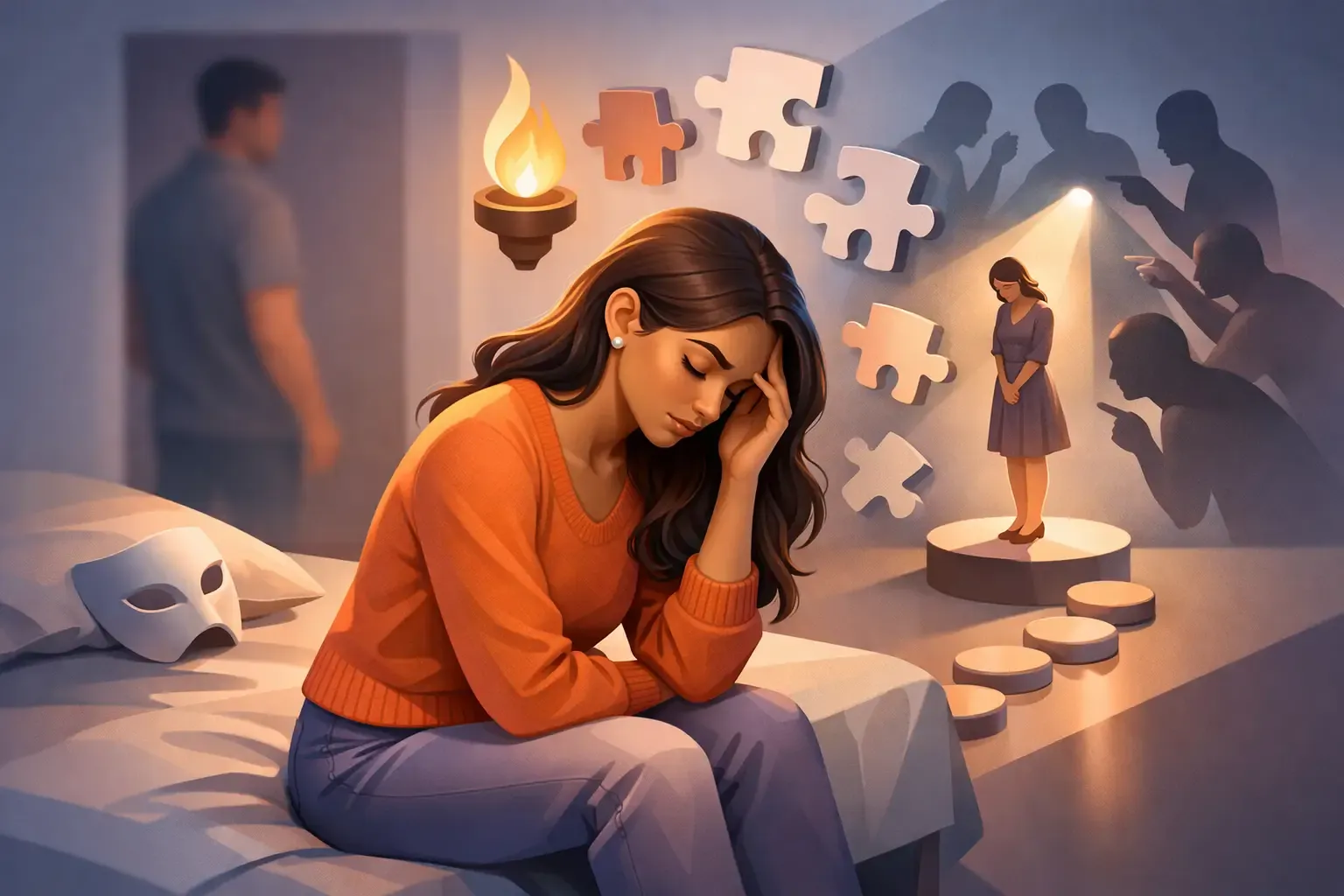
You may not have one clear story to point to. You may have a hundred small moments instead - a joke that landed wrong, a conversation that left you apologizing, a look that made you go quiet, a strange sense that you are always adjusting yourself to keep the peace. If you have been asking, can emotional abuse be subtle, the answer is yes. Very often, that subtlety is exactly what makes it so hard to name.
A lot of women think abuse has to be obvious before it counts. They picture shouting, threats, cruelty so blatant that anyone would recognize it. But emotional abuse often works in a quieter way. It blurs reality instead of announcing itself. It creates confusion before it creates certainty. And because it can look small from the outside, you may spend a long time explaining it away from the inside.
Why subtle emotional abuse is so hard to spot
Subtle emotional abuse rarely arrives as a single shocking event. It usually comes as a pattern of interactions that make you question yourself over time. That matters, because the human mind is much more likely to dismiss a single odd moment than a repeated pattern it has not fully tracked yet.
One comment may seem careless. One broken promise may seem human. One cold withdrawal may seem like stress. But when these things keep happening, and they always leave you feeling anxious, guilty, or off balance, the problem is no longer that one moment. The problem is the pattern.
This is where many women get stuck. They are not asking, "Did something painful happen?" They are asking, "Was it bad enough? Was it intentional? Am I overreading this?" Those questions can keep you circling for months or years.
Subtle abuse also hides behind plausible explanations. He was tired. He had a hard childhood. He did not mean it that way. You were both upset. Nothing he did sounds severe enough when you say it out loud. But your body may still be telling the truth. You feel tense before bringing things up. You rehearse simple conversations. You leave interactions feeling smaller than when you entered them.
Can emotional abuse be subtle without yelling or insults?
Yes. Emotional abuse does not need to be loud to be damaging. It can happen through tone, timing, omission, denial, and repeated invalidation. Sometimes the harm comes less from what is said and more from what keeps happening to your sense of reality.
He may not call you names, but he may routinely
twist your words
until you are defending things you never said. He may not scream, but he may punish you with silence when you express hurt. He may not openly control you, but he may create such a strong backlash to your independence that you slowly stop doing what matters to you.
That is part of why subtle emotional abuse can be so disorienting. There may be no single sentence you can quote that captures the whole thing. Instead, there is an atmosphere. You are increasingly careful. Increasingly uncertain. Increasingly disconnected from your own read on what just happened.
The absence of overt cruelty does not mean the presence of safety.
What subtle emotional abuse can look like
Sometimes it looks like chronic dismissal. You say something matters to you, and he responds as if you are too sensitive, too negative, or making a problem out of nothing. The issue is not merely disagreement. It is that your inner reality keeps getting downgraded.
Sometimes it looks like
selective kindness
. He is warm when things go his way, attentive when you are slipping away, then cold or contemptuous when you need consistency. That unpredictability can make you work harder for scraps of closeness and doubt your own judgment when the good moments return.
Sometimes it looks like confusion after every conflict. You enter a conversation wanting to address one specific hurt and leave feeling like you are the problem. Somehow the focus moves from what he did to how you brought it up, your tone, your memory, your timing, your motives. Nothing gets resolved, but you end up apologizing.
It can also look like small acts of erosion. Private criticism framed as honesty. Embarrassing you and then calling it humor. Withholding affection until you fall back in line. Making you feel selfish for having normal needs. Watching you struggle and offering just enough warmth to keep you invested, but not enough consistency to feel secure.
Any one of these moments might seem explainable. Repeated together, they can reshape the entire relationship.
The question is not only what he did. It is what it did to you.
This part matters. Many women stay trapped in analysis because they are trying to prove intent beyond all doubt. But emotional abuse often becomes clearer when you ask a different question: what is this pattern doing to me?
Are you second-guessing your memory more than you used to? Are you afraid to bring up concerns because it always turns into a bigger mess? Have you started editing your personality to avoid his reactions? Do you feel lonelier with him than you did alone?
Healthy relationships can include conflict, bad moods, misunderstandings, and imperfect communication. That is true. Not every painful moment is abuse. The difference is in the pattern and the impact. In a healthy relationship, repair is possible. Your feelings may not always be agreed with, but they are not routinely erased. You do not have to abandon yourself to stay connected.
With subtle emotional abuse, the pattern often trains you away from yourself. You stop trusting your discomfort. You start needing more evidence than you would ever require for anyone else. You become your own cross-examiner.
If you cannot prove it, you can still notice it
This is one of the hardest parts of the in-between place. You may not have language yet. You may not be ready to use the word abuse. You may not even know what you believe. That does not mean nothing is happening.
Clarity often begins before certainty. It begins with noticing.
Notice which conversations leave you foggy. Notice whether your concerns are met with care or deflection. Notice whether your pain becomes an inconvenience, a joke, or a case against you. Notice whether you feel more grounded after talking things through or less grounded.
If it helps, stop trying to write the whole story at once. Just
record the moments
. What was said. What happened before it. How your body felt. What you did next. Over time, patterns become easier to see when they are not competing with memory, hope, and pressure.
A private note on your phone, a journal page, or a simple dated list can help. Not because you owe anyone a perfect case, but because confusion thrives in vagueness. Specificity can return you to yourself.
What to ask yourself when can emotional abuse be subtle is your real question
Sometimes the question underneath can emotional abuse be subtle is this one: if I am this hurt, am I allowed to take it seriously even if I cannot make it sound extreme?
Yes.
You are allowed to take patterns seriously before they become easier to explain to other people. You are allowed to trust the dread, the mental spinning, the shrinking of your voice, the sense that you are disappearing inside the relationship.
A few gentle questions may help you sort what you are living with:
Do I feel free to tell the truth here?
Not just technically. Emotionally. Can you say, "That hurt me," without bracing for retaliation, mockery, denial, or withdrawal?
Do conflicts lead to clarity or confusion?
After a hard conversation, do you feel more understood and connected, or more scrambled and guilty?
Am I becoming more myself or less myself?
Pay attention to whether this relationship is making you smaller, quieter, more anxious, and more self-doubting.
Is the pattern changing, or am I living on brief exceptions?
A loving moment after harm can feel powerful. But a break in the pattern is not the same thing as a changed pattern.
These questions are not a test you have to pass. They are simply a way to hear yourself more clearly.
You do not need to wait for it to get worse
Many women minimize subtle emotional abuse because they are comparing it to what could happen, not to what is happening. He is not hitting me. He is not yelling all the time. He can be thoughtful. Other people have it worse.
All of that may be true, and still your pain deserves your attention.
You do not need the worst-case version before you are allowed to acknowledge harm. You do not need public proof before you privately honor what your nervous system already knows. And you do not have to decide everything today. Clarity before action is still action.
If you are in that quiet, shaky place where nothing feels obvious enough, start smaller than certainty. Name one pattern. Write down one conversation. Tell yourself one honest sentence: I do not feel safe being fully real here.