The Recovery Room
12 Manipulative Apology Examples to Notice
Learn how manipulative apologies can shift blame, create guilt, and keep a painful pattern going, plus what genuine repair looks like.

A real apology can create a little room to breathe. You feel heard. The harm is named. You are not asked to stop feeling what you feel just because someone has finally said the word “sorry.” A manipulative apology often does the opposite. It may sound polished, emotional, or urgent, but you walk away heavier than before. Suddenly you are comforting the person who hurt you, defending your memory, or wondering whether you were unfair to bring it up at all.
That feeling is worth taking seriously. An apology is not only a sentence. It is part of what happens next. Does it make room for your experience, or does it quietly move the focus back onto theirs? Does it lead to a different pattern, or does it simply end the conversation until the next time?
These manipulative apology examples are not a test you have to pass before trusting yourself. One awkward or defensive apology does not tell you everything about a relationship. But repeated apologies that leave you guilty, confused, responsible, or afraid to bring things up can reveal a lot about how accountability is being handled.
What makes an apology manipulative?
Manipulation is not always loud. Sometimes it arrives as a sigh, a tearful speech, a long message, or a quick “I said I was sorry” that makes any further feeling seem unreasonable. The common thread is not perfect wording. It is the effect: responsibility gets blurred, your pain becomes inconvenient, and the person who caused harm regains control of the conversation.
A genuine apology can include discomfort. It can be imperfect. The difference is that it stays connected to the harm. It does not require you to reassure the other person, forgive on command, or accept an excuse as a replacement for change.
12 manipulative apology examples
1. “I’m sorry you feel that way.”
This sounds gentle, but it does not name what happened. The apology is aimed at your reaction, not the behavior that caused it. The message can become: your feelings are unfortunate, but I do not need to take responsibility for why you have them.
A more accountable version would name the action: “I interrupted you, mocked you, and then acted like you were overreacting. That was hurtful.” Specificity matters because it shows the person is willing to look directly at what they did.
2. “I’m sorry, but you pushed me too far.”
The word “but” changes the center of the sentence. What began as an apology becomes an explanation for why you deserved the behavior. You may end up reviewing your tone, your timing, your needs, or the way you raised the issue while their choice disappears from view.
Conflict does not remove responsibility. Someone can say they were overwhelmed and still own how they spoke to you. When stress becomes a reason you must accept harm, the apology is protecting the behavior instead of repairing it.
3. “I already said I’m sorry. What more do you want from me?”
This turns an apology into a closing argument. Your hurt is treated as a task they completed, not an impact that may take time to understand. You may feel pressured to say “nothing” even when something is still unresolved, simply to avoid being seen as demanding.
You are allowed to need more than words. You may need a conversation, space, a boundary, or evidence that the behavior will not be repeated. None of that means you are refusing to forgive. It means an apology has not erased the impact yet.
4. “I’m sorry for everything. I’m just a terrible person.”
This can look like remorse, but it often pulls the attention away from the specific harm and toward their feelings about themselves. Now you are expected to soothe them: “No, you are not terrible. I did not mean that.” The original issue gets lost while you take care of the person who hurt you.
Real accountability does not require self-hatred. It requires staying present with a specific choice and making a plan to do better. A person can feel ashamed without asking you to carry that shame for them.
5. “I guess I can’t do anything right.”
This is a familiar kind of emotional smoke. It turns a concern about one action into an accusation that you think they are always wrong. You may rush to soften your point, reassure them, or abandon the conversation completely.
Notice what happens after you raise a concern. If you repeatedly become the one doing the emotional repair, it may help to hold onto the original sentence: “I am talking about this one thing that happened.” You do not have to defend yourself against a larger claim you never made.

6. “I’m sorry if I hurt you.”
That small word “if” can leave the harm floating in the air as a question. Maybe you were hurt. Maybe you were not. Maybe you are simply too sensitive. In a repeated pattern, this uncertainty can make it harder to trust your own response.
Sometimes people use this phrase because they do not know how to apologize. What matters is what follows. Can they hear what hurt without arguing that it should not have hurt? Can they make room for impact even when their intention was different?
7. “You know I didn’t mean it like that.”
Intent can be useful context, but it does not erase impact. A caring person can explain what they meant and still acknowledge that their words landed badly. A manipulative apology makes intent the entire conversation, as if your pain becomes invalid because they say they did not intend it.
If someone repeatedly uses good intentions to avoid looking at a harmful pattern, you may find yourself doubting the reality of what keeps happening. The guide to gaslighting versus genuine forgetfulness can help you look at whether there is room for your experience when memories or meanings differ.
8. “I’m sorry, but you’re bringing up the past again.”
This line can be especially confusing when the behavior keeps repeating. You are not necessarily stuck in the past. You may be trying to talk about something that was never resolved. When there has been no repair, no changed behavior, and no safer pattern, the impact is still present.
It can help to separate an old incident from an ongoing pattern. Ask yourself: has this actually stopped? Was the issue ever discussed without blame, dismissal, or pressure to move on? If not, it makes sense that your body and mind are still trying to understand it.
9. “Fine. I’m sorry. Happy now?”
The words may technically be there, but the contempt tells a different story. This is apology as punishment. You are meant to feel petty or cruel for asking to be treated with care. Over time, that can teach you that it is easier to swallow hurt than to risk another mocking response.
Feeling nervous about raising ordinary concerns is information. It does not prove the whole story by itself, but it is worth noticing. Respect should not require you to make your needs smaller enough to avoid someone else’s anger.
10. “I said sorry. You need to let it go.”
No one can set a deadline for your feelings. Forgiveness, if it comes, is not something you owe because another person has become uncomfortable. This kind of apology often asks for compliance rather than repair.
You can take your time. You can decide that words are not enough yet. You can also choose not to keep discussing the issue in a conversation that has become circular. The article on stopping the urge to keep explaining offers language for the moment you realize you are being asked to abandon your own point of view.
11. “After all I’ve done for you, you’re upset about this?”
This turns care into a ledger. Their gifts, kindnesses, or sacrifices are used to cancel your right to name harm. You may feel ungrateful for having a boundary at all, especially if you are used to measuring yourself by how much you can understand or forgive.
Good moments do not erase bad ones. A relationship can contain tenderness and still include a harmful pattern. You do not have to deny everything good in order to take one painful thing seriously.
12. “I was stressed, tired, drunk, overwhelmed, or triggered.”
Context matters. People can have difficult days, struggle with stress, or make choices they regret. But context is not the same as accountability. An explanation becomes manipulative when it is used to dilute responsibility while the same behavior continues.
A stronger apology might say: “I was overwhelmed, and I still should not have yelled at you. I am going to take a break before conversations get that far.” The difference is not whether stress is mentioned. The difference is whether the person is using it to excuse the harm or to prevent a repeat.

What a genuine apology usually includes
There is no perfect script. A genuine apology may be brief, awkward, or emotionally messy. But it usually has a few steady qualities. It names the behavior without making you decode it. It acknowledges impact without arguing with your memory. It does not demand immediate forgiveness. And it is followed by a change you can actually see over time.
It may sound like: “I read your private messages after you told me not to. That was a violation of your privacy. You did not deserve to have to defend that boundary. I am sorry, and I am going to stop.” The words matter because they are specific. The change matters because words alone cannot build trust back.
One helpful question is: after the apology, who is carrying the emotional weight? If you are left soothing them, proving your pain, or promising not to bring it up again, the conversation may not be about repair. If they are willing to listen, stay accountable, and make a different choice, that points somewhere else.
Look at the pattern, not only the sentence
It can be tempting to search for the perfect phrase that proves something. Most relationships are not that simple. A single “sorry you feel that way” may be clumsy. A single emotional reaction may come from shame. What matters is the pattern around it.
- Do you feel safer naming concerns, or do you feel more afraid to bring them up?
- Does the same behavior continue after apologies?
- Do conversations end with you comforting them or apologizing for your reaction?
- Are your boundaries treated as a problem to solve rather than a limit to respect?
- Do you leave feeling clearer, or do you leave feeling foggier than before?
You do not need to answer every question today. Sometimes clarity begins by admitting that the apology did not bring relief, even if you cannot fully explain why yet. The Emotional Abuse Checklist can help you look at repeated patterns of blame, fear, isolation, and control without forcing yourself to make a decision before you are ready.
A private way to hold onto what happened
If it is safe, write down what was said after a difficult apology. Keep it simple: what happened, what the person said, how you felt before and after, and what changed in the days that followed. This is not about building a case or finding the perfect label. It is a way to keep your own experience from being rewritten in the next conversation.
Use a safer place to write if you are worried someone checks your phone, notes, or accounts. The guide to documenting gaslighting patterns explains how to keep a private record with safety in mind. You can also decide that writing is not safe right now. Your memory and feelings still matter.
How Quinn’s tools can help
Quinn’s work is for the part of the story where you are still making sense of what happened. You do not have to confront anyone, leave a relationship, or know exactly what to call it before you use a private tool.
When an apology leaves you wondering why you feel worse instead of better, My Clarity Journal gives you a structured place for facts, feelings, and repeated patterns. You can also explore the Apology Audit and other clarity tools when you want prompts that help you look at the difference between accountability and a familiar cycle.
You are allowed to take your reaction seriously. You are allowed to need more than a quick apology. And you are allowed to trust that repair should leave you with more room to be yourself, not less.

Frequently asked questions
When “sorry” leaves you with more questions.
What is a manipulative apology?
A manipulative apology uses the appearance of remorse to avoid accountability, shift blame, rush your forgiveness, or make you responsible for the other person’s feelings. The words may include “sorry,” but the outcome often leaves you more confused or guilty instead of clearer about what happened.
Can someone give a bad apology without being manipulative?
Yes. People can become defensive, embarrassed, or clumsy when they have caused harm. One imperfect apology does not prove a larger pattern. What matters is whether they can return to the specific issue, listen without punishing you, and make a real change over time.
How do I respond to a manipulative apology?
You do not have to settle the whole relationship in that moment. A short response such as “I need time to think about this” or “I am still talking about what happened” can help you keep hold of your point. If a conversation becomes unsafe or punishing, it is okay to pause it and reach out for support.
Is an apology without change manipulation?
An apology without immediate perfection is not automatically manipulation. But when the same harm keeps happening and every apology asks you to move on without a change in behavior, the apology may be functioning as part of the pattern rather than repair.
Keep reading
More places to find steadier ground.

Gaslighting Versus Genuine Forgetfulness
What matters when a disagreement about memory leaves you questioning yourself.
Read more →
Reactive Abuse Examples: What a Survival Response Can Look Like
Look at the wider pattern behind a reaction that has left you questioning yourself.
Read more →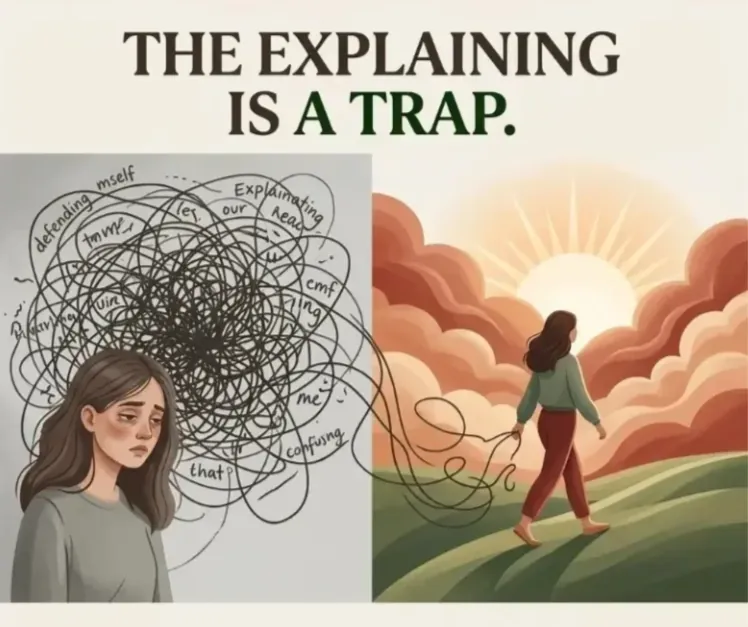
How to Stop Explaining Yourself
Language for the moment a conversation becomes a demand that you abandon your own point of view.
Read more →