Signs of Emotional Manipulation in a Relationship
Signs of emotional manipulation in a relationship can include guilt, confusion, pressure, and control. Learn what to notice without rushing yourself.

Emotional manipulation can be difficult to notice because it rarely arrives as one unmistakable moment. A partner may make you feel guilty for having a need, turn a concern back on you, or withdraw affection until you are the one trying to repair the distance. You may leave a conversation feeling small, responsible, or confused, without being able to explain exactly why.
A disagreement, a defensive moment, or a poorly chosen sentence does not automatically mean someone is manipulating you. Every close relationship has friction. The question is whether a repeated pattern leaves room for your feelings, your choices, and your version of events, or whether it repeatedly asks you to give those things up to keep the peace.
This guide is not a test and it is not a demand to make a decision today. It is a place to notice what happens when direct, respectful communication is replaced by pressure, fear, guilt, or confusion.
What emotional manipulation can look like
Emotional manipulation is a useful phrase for behavior that tries to influence another person through indirect pressure instead of openness and respect. The National Domestic Violence Hotline’s description of emotional abuse includes non-physical behavior used to control, isolate, or frighten a partner. That can include insults, monitoring, intimidation, threats, excessive jealousy, and making someone doubt their own reality.
The pattern does not need to look dramatic from the outside to matter. You might find yourself cancelling plans because the aftermath is exhausting, checking your phone because you expect an accusation, or editing every sentence before you say it. The impact on your freedom, confidence, privacy, and sense of calm is information.
It can help to look at the whole pattern rather than trying to settle whether one particular moment was bad enough. The guide to emotional abuse patterns can offer more language for noticing what repeats over time.
1. Your concern becomes their injury
You bring up something that hurt you, and before long the subject has become how unfair, ungrateful, or cruel you were for mentioning it. They may cry, become angry, accuse you of attacking them, or tell you that you ruined a good day. You may end up apologizing before your original concern has had any room at all.
A caring partner can feel hurt by feedback. The difference is whether there is still space for both realities. Can they hear that something affected you, ask questions, and take responsibility for their part? Or do their feelings consistently erase yours? Blame shifting examples can help you recognize when accountability keeps being redirected.
2. Guilt is used as a lever
Guilt can be part of a healthy relationship when it helps someone repair a real mistake. It becomes something else when guilt is used to make your ordinary choices feel like betrayal. Perhaps you are made to feel selfish for seeing friends, needing time alone, spending money you are allowed to spend, or saying no to sex, a visit, or a request.
The pressure may be quiet: a long silence, a wounded look, a reminder of everything they have done for you, or a suggestion that a loving partner would not need boundaries. A request for closeness is different from making you responsible for another person’s emotional stability. You can care about someone without surrendering your right to choose.

3. The rules keep changing
You may try very hard to do what they asked, only to learn that it was not enough or that a different rule now applies. You explain yourself more carefully, make a promise, change a habit, or give up something important. Then the criticism moves to a new target. The result can be a constant feeling that peace is just one more adjustment away.
In a workable relationship, people can negotiate needs and make repairs. In a controlling pattern, the goalposts move so often that you cannot succeed. If you recognize the feeling of constantly preparing for a reaction, walking on eggshells in a relationship may help you separate consideration from fear.
4. Your memory is treated as the problem
People can remember details differently. That is not the same as being told that an event never happened, that you imagined it, or that you are too sensitive to know what you felt. Repeated denial can make a person begin to question their own recall, even when they remember a conversation clearly.
The Office on Women’s Health notes that emotional and verbal abuse can include behavior that frightens, isolates, or controls a partner, and describes gaslighting as repeated attempts to make someone doubt their memory or sanity. You can read more about the difference between gaslighting and genuine forgetfulness without needing to diagnose anyone.
5. Affection or attention feels conditional
Warmth can be real, and it can still become part of a painful pattern when it appears mainly after you comply, apologize, or abandon a boundary. A partner may become especially loving after a frightening argument, then distant or punishing when you raise the same concern again. That swing can make relief feel so powerful that it is hard to hold on to what happened before it.
The point is not to dismiss every apology or tender moment. It is to ask whether repair changes anything. Does the person name their behavior without blaming you? Do they respect your boundaries when they are upset? Do you feel safer and freer over time? The emotional abuse cycle explores why good moments can make a harmful pattern harder to see.
6. Your world becomes smaller
Manipulation can work by making the rest of your life harder to reach. Someone may criticize your friends, create conflict before every family visit, demand constant updates, or make work, school, money, privacy, and rest feel like things you must ask permission to have. Eventually, staying connected to other people can feel more exhausting than withdrawing.
The Office on Women’s Health warning signs include monitoring, jealousy, discouraging contact with friends or family, and controlling finances or decisions. It is worth noticing if your routines, support, or independence have gradually narrowed, even if no one ever directly told you that you could not go.
What healthy conflict leaves room for
Healthy conflict can be uncomfortable. It may include disappointment, tears, frustration, or time apart to cool down. But it still leaves room for you to have a feeling, say no, ask a question, and remain connected to your own reality. Both people can take responsibility. Boundaries are not punished. Repair is not conditional on one person becoming smaller.
This is not about finding a perfect relationship or judging every mistake. It is about whether you have enough safety and freedom to be a full person inside it. If you keep finding that your needs only count when they do not inconvenience someone else, that pattern deserves care and attention.
Questions that can bring you back to the pattern
When a relationship feels confusing, it is easy to focus on the latest conversation and lose sight of what has been happening over time. You might ask yourself: What happens when I disagree? What do I have to do to restore calm? Have I become less connected to people, routines, or parts of myself that once mattered to me? Do I feel more free to speak, or more careful?
These questions are not a scorecard. They can simply interrupt the pressure to explain away each moment on its own. You may find it useful to notice how your body feels before and after contact, whether an apology is followed by different behavior, and whether you feel able to make an ordinary choice without preparing for consequences. You do not have to prove that every interaction was harmful before you give your own discomfort some care.
If you want a few more quiet questions, Best Questions After Emotional Manipulation offers a private starting point. You are allowed to take your observations seriously even if you are still sorting out what they mean.

A private way to notice the pattern
You do not have to confront anyone because you recognized something here. In some situations, confrontation or announcing a change can increase risk. A smaller next step can be to notice one interaction: what happened, what you asked for, what response you received, and how you felt after. You are not building a case or required to reach a conclusion.
If writing feels safe, a private prompt can help you hold on to the whole interaction instead of only the apology, relief, or explanation that followed it. If someone may look through your phone, notebook, accounts, or belongings, choose the option that creates the least risk. You do not need a written record to take your experience seriously.
For a slower, structured place to reflect, Quinn’s Focused Reflections worksheets offer individual pages from $4, with the full bundle as one option. If you want confidential support or a safety-focused next step, the support page gathers places to begin.
When safety needs to come first
Take threats, stalking, weapon access, strangulation, forced sex, escalating violence, threats involving children or pets, and threats of self-harm seriously. If you are in immediate danger in the United States, call 911 when it is safe to do so. If you are not in immediate danger, the National Domestic Violence Hotline offers confidential support by phone, chat, and text. You do not have to be ready to leave before you ask for information or talk through options.
You are allowed to pay attention to what is happening before you can explain it neatly. Your safety, privacy, relationships, and voice deserve room, as do the parts of yourself that have learned to stay quiet.
Frequently asked questions
A pattern is worth noticing, even when you are not ready to name it.
What are common signs of emotional manipulation in a relationship?
Common signs can include guilt used to pressure you, repeated blame shifting, changing rules, denial of your experience, affection that feels conditional, and efforts that make your world smaller. One behavior alone may not tell the whole story. The pattern and its effect on your freedom, confidence, and safety matter.
Is every difficult argument emotional manipulation?
No. Close relationships include misunderstandings, defensiveness, and conflict. A healthier conflict still makes room for both people to be heard, to take responsibility, and to repair. Manipulation is more likely when the same patterns repeatedly leave you guilty, confused, isolated, or afraid to express a need.
What should I do if I think I am being manipulated?
You do not have to confront anyone or make an immediate decision. Begin with the safest small step available to you, such as noticing what repeats, speaking with one steady person, or contacting a confidential advocate. If privacy is limited or you fear a reaction, put safety first and avoid any step that could increase risk. You get to choose your own pace.
Can emotional manipulation become abuse?
Repeated manipulation can be part of emotional abuse, especially when it is used to control, isolate, frighten, or undermine a partner. You do not need a label before you seek support. If behavior is making you feel unsafe or shrinking your life, a confidential advocate can help you consider options.
Keep reading
More language for what has been hard to name.
Best Questions After Emotional Manipulation
Quiet questions for noticing the pattern and returning to your own experience.
Read the guide →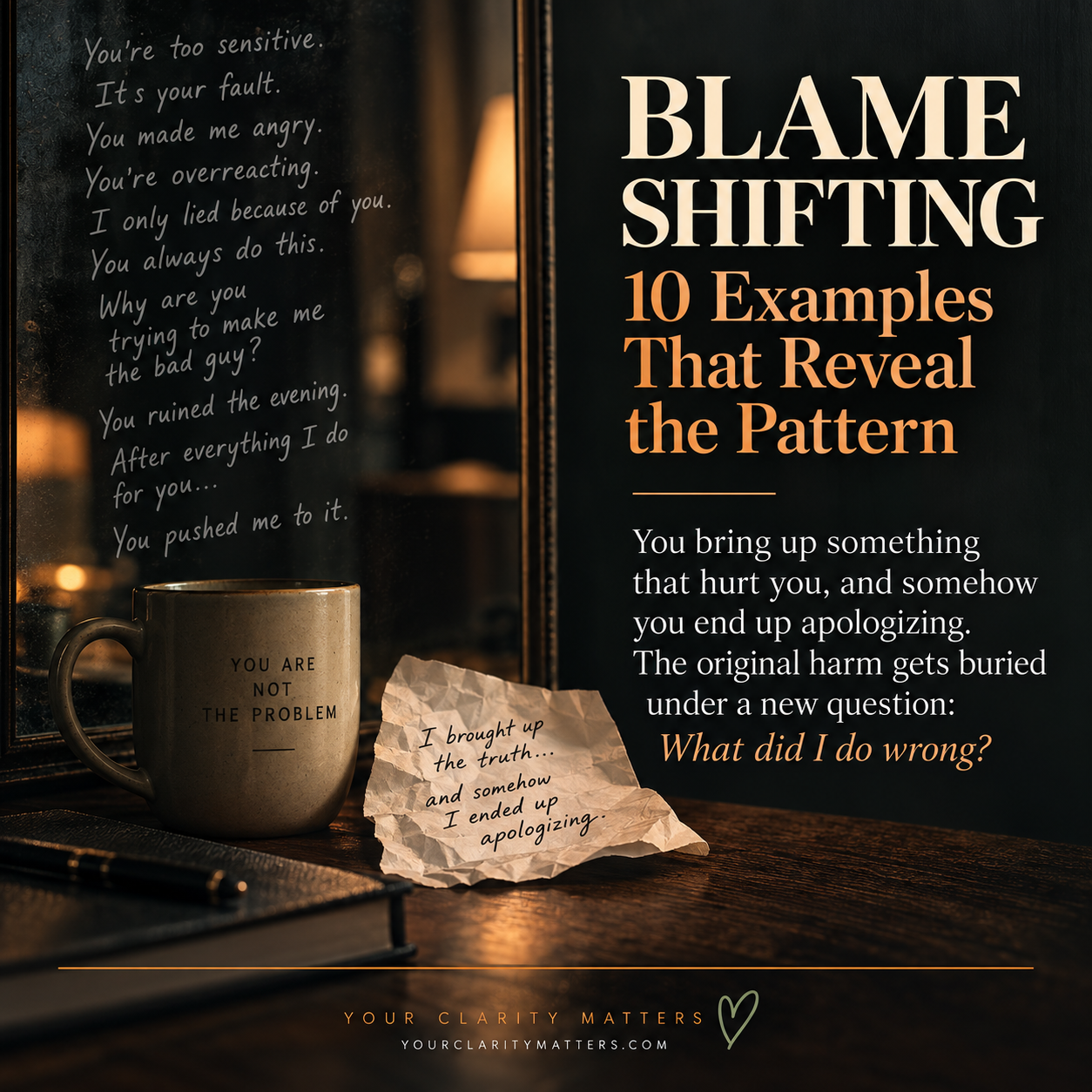
10 Blame Shifting Examples That Help You See Clearly
Examples of how a concern can get turned into your responsibility.
Read the guide →
Why Do I Doubt Myself?
A quieter look at self-doubt after a relationship has made your perspective feel unsteady.
Read the guide →Photography: Jahanzeb Ahsan, Bianca Maria, and Unsplash contributors.