The Recovery Room
Constantly Apologizing: Is It Emotional Abuse?
Constantly apologizing can be a sign that a relationship has taught you to carry blame. Learn what to notice without blaming yourself.

“Sorry” can become automatic. You say it when someone is irritated, when a room goes quiet, when you ask a simple question, when you have a need, or when you are not even sure what happened. You may apologize before you know whether you did anything wrong.
That habit can be exhausting. It can also be confusing, because it may look like politeness from the outside while it feels like fear on the inside. Constant apologizing is not proof that emotional abuse is happening. But it can be an important pattern to notice, especially when it sits beside blame, criticism, intimidation, monitoring, or the feeling that every disagreement somehow becomes your fault.
You do not have to decide what to call your relationship today. This is simply a place to look more closely at what your apologies are trying to protect you from.
When “sorry” becomes a way to keep the peace
An apology is meant to acknowledge harm and repair it. In a healthy relationship, both people can take responsibility, listen, and make room for each other’s point of view. It is normal to apologize when you have caused hurt. It is different to feel responsible for another person’s anger, jealousy, disappointment, or decision to punish you.
When a person repeatedly reacts to concerns by turning the focus back on your flaws, an apology can start to feel like the quickest way to end the moment. You may say sorry for being upset. Sorry for asking. Sorry for bringing it up. Sorry for making them angry. Sorry for not understanding them well enough. The immediate tension may drop, but the original issue disappears with it.
Resources from love is respect describe emotional abuse as a pattern used to gain or maintain power and control. That pattern can include blame, intimidation, humiliation, isolation, constant checking in, and making someone question their own memory. A single argument does not tell the whole story. Repetition, escalation, and the way you feel before, during, and after conflict matter.
If you have been told that you are “too sensitive,” “always starting something,” or responsible for someone else’s behavior, you may recognize parts of this in Is It Gaslighting or Me?. Gaslighting is one way a person can make another person doubt their reality, but you do not need to use a label perfectly to take your own unease seriously.
Constant apologizing is a sign to look at the bigger pattern
The question is not “Do I say sorry too much?” on its own. The more useful question is: “What tends to happen if I do not apologize?”
Maybe the answer is ordinary discomfort. Maybe you worry you have been rude because that is how you were raised. Or maybe the answer is sharper: you expect rage, silent treatment, a lecture, mockery, accusations, threats, or hours of trying to prove that your intentions were good. If your nervous system has learned that a small apology can make a difficult person less dangerous or less unpredictable, it makes sense that it would reach for that tool.
That does not mean you caused the treatment you were trying to manage. The National Domestic Violence Hotline is clear that abusive behavior is a choice made by the person using it, not something a survivor causes. Their discussion of self-blame after abuse also names how easily a damaged sense of self-worth can make someone believe they deserve mistreatment. You do not have to earn basic respect by becoming easier to blame.
It may help to notice the direction of responsibility in a conflict. In a caring relationship, responsibility can move both ways: one person can say, “I hurt you,” while the other can say, “I hear you.” When responsibility only ever travels toward you, the relationship can begin to feel like a test you cannot pass. The rules shift, the explanation is never enough, and the apology becomes a way to keep trying for a finish line that keeps moving.

Patterns that can sit beside over-apologizing
No checklist can interpret your relationship for you. Still, it can help to notice what else is happening around the apologies. Do you often end up apologizing after raising a concern about something they did? Do they deny words they said, minimize the impact, or insist that your memory is wrong? Do you feel you must manage their moods so carefully that your own needs disappear?
Other patterns may include being criticized until you doubt your judgment, being accused of causing their outbursts, being cut off from friends or family, or being monitored through your phone, accounts, location, or routines. WomensLaw explains emotional and psychological abuse as behavior used to scare, control, hurt, or isolate someone, and notes that it can change how a person thinks about themselves over time.
There is a particular kind of confusion that can happen when you leave a conversation believing you were wrong, even though you entered it trying to name a hurt. The conversation may have moved so quickly that you cannot trace how you went from “That upset me” to “Please forgive me.” The article on gaslighting versus emotional manipulation can help separate those ideas, while these examples of manipulative apologies may help you examine the other side of the exchange too.
It also helps to make room for nuance. A relationship can be unhealthy without every difficult feeling proving abuse. People can be defensive, immature, stressed, or poor at conflict. The dividing line is not whether either person ever makes a mistake. It is whether one person repeatedly uses fear, blame, humiliation, isolation, or reality-twisting to keep the other person smaller and easier to control.
A private way to get clearer
You do not have to confront anyone to start paying attention. In fact, if you are worried that a partner checks your devices, reacts badly to questions, or becomes more controlling when they feel challenged, private observation may be the safer place to begin.
After an interaction, try writing down only the facts: what was said, what you asked for, what happened next, and what you apologized for. Then add one line about how you felt in your body. Were you tense before you spoke? Did you feel relief when you took the blame? Did you leave the conversation more confused than when it started? The goal is not to build a case against someone. It is to give your own memory a place to land.
Quinn’s guide to documenting gaslighting patterns offers a private, practical way to track what is happening. A relationship reality check can also help when you need a few quiet questions rather than a big decision.

Small pauses that do not ask you to become fearless
It can be tempting to tell yourself that the answer is to stop apologizing immediately. But a habit that once helped you get through tense moments does not need to be ripped away overnight. You deserve more care than that.
When it is safe, try placing a small pause between the feeling and the apology. You might take one breath, put your phone down, or say, “I need a moment to think.” You might ask yourself, “What exactly am I apologizing for?” If you cannot name it, you can wait. Silence does not mean you are guilty.
You can also practice replacing an automatic apology with a simple acknowledgement: “I hear that you are upset.” “I can talk about this.” “I did not mean to hurt you.” “I need more information.” These are not magic phrases, and they are not a test you have to pass. They are small reminders that another person’s feeling is real without automatically becoming your fault.
If direct conversation is unsafe or predictably turns into punishment, do not use these phrases as a confrontation strategy. Your safety matters more than practicing a new script. The private safety planning guide is designed for situations where clarity and privacy need to come before action.
What self-trust can look like after you have apologized for everything
Self-trust is not becoming certain about every memory or never needing another person’s perspective. It is being able to return to your own experience without immediately putting it on trial. It is letting yourself say, “That did not feel right,” before you explain it away.
That can start very quietly. You might notice that you were hungry, tired, sad, relieved, or afraid. You might notice that you asked for something reasonable. You might notice that your partner’s reaction was much larger than the moment called for. None of those observations require you to make a decision right away.
For readers who want a more guided place to put those observations, My Clarity Journal was made for private reflection on facts, feelings, and patterns. The Reactive Abuse reflection may also be useful if you have been provoked until you reacted and then made to carry all the guilt for what happened.

When to reach beyond your own notes
Private clarity can be a strong first step, but you do not have to hold everything alone. Consider sharing what is happening with a trusted friend, family member, counselor, or local domestic violence advocate if that feels safe. You do not need to arrive with a perfect explanation. You can begin with, “I keep apologizing because I am afraid of what happens when I do not.”
If you are in the United States and need confidential support, The National Domestic Violence Hotline offers phone, chat, and text support. If you are in immediate danger, call 911. If someone may monitor your device, think carefully about how and when you search for help, and use a safer device when possible.
Constant apologizing is not a character flaw. It may be a learned way of surviving discomfort, keeping a situation calm, or making yourself as small as possible. You are allowed to notice that without shaming the version of you who learned it.
Frequently asked questions
A few things people ask when sorry has become automatic.
Is constantly apologizing always a sign of emotional abuse?
No. People apologize for many reasons, including temperament, family habits, anxiety, workplace pressure, or simply trying to be polite. What matters is the wider pattern: whether you are being blamed, criticized, monitored, frightened, isolated, or made to doubt your memory. One habit is a clue to explore, not a verdict.
Why do I say sorry when I have done nothing wrong?
It can become a way to reduce tension quickly. If disagreement has often led to anger, withdrawal, ridicule, or a long lecture about what you did wrong, apologizing may start to feel like the fastest route back to calm. That does not mean the blame was yours.
How can I stop apologizing so much without making things less safe?
Safety comes first. You do not need to challenge someone or announce a new boundary to begin noticing the pattern. Start privately: pause before replying when you can, write down what happened, and speak with someone safe. If you think a partner may react badly, a domestic violence advocate can help you consider options that fit your situation.
What can I say instead of sorry?
When it feels safe and true, try a neutral statement such as “I need a moment to think,” “I hear that you are upset,” or “I can talk about what happened.” You do not need a perfect script. The point is not to perform confidence; it is to give yourself a little room before taking responsibility for something that may not be yours.
Keep reading
More places to find language for what you are living.

How to Stop Explaining Yourself
Why over-explaining can feel necessary, and how to begin stepping out of the cycle.
Read more →
Self Validation After Gaslighting
A gentle place to rebuild trust in your own memory, feelings, and judgment.
Read more →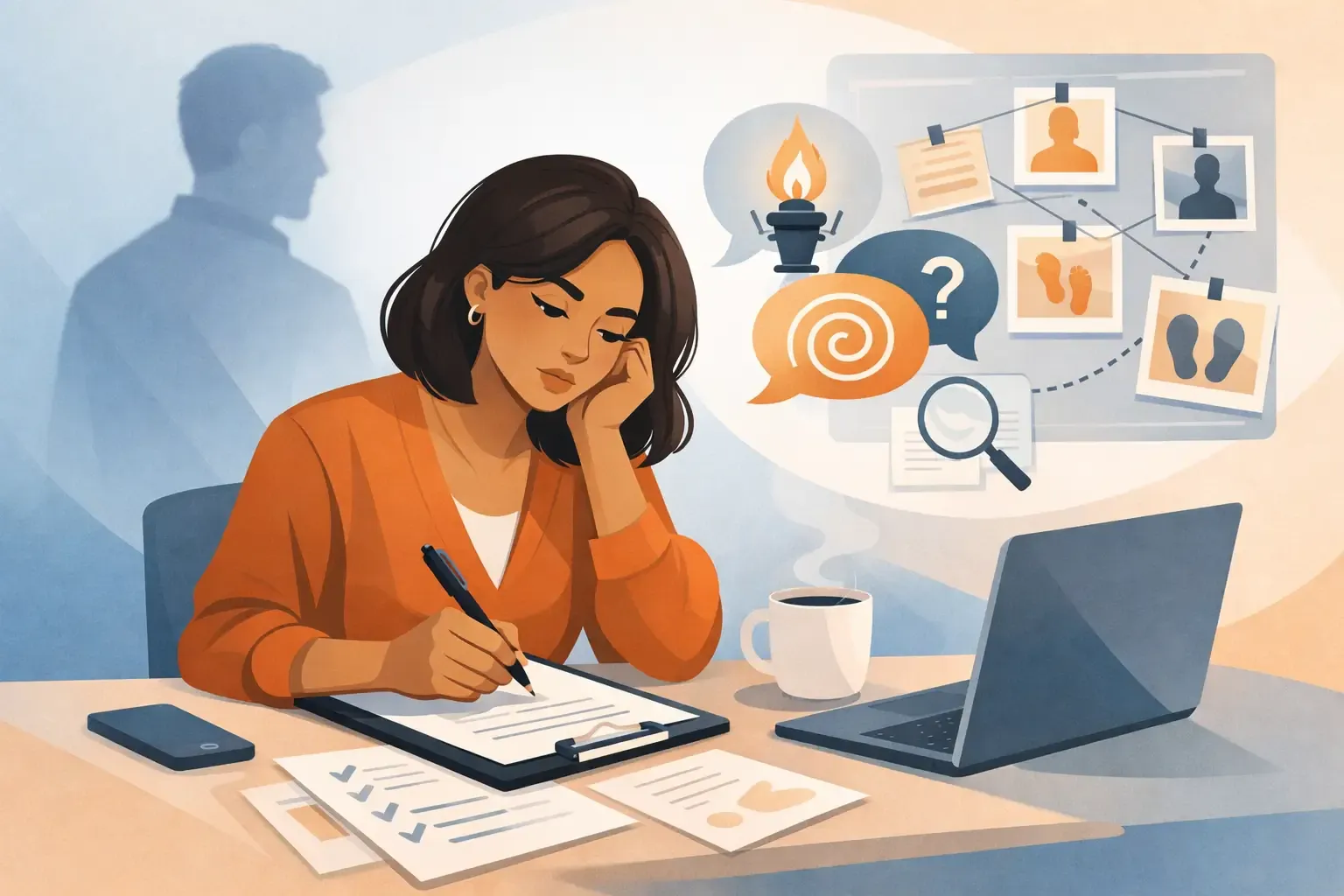
How to Document Gaslighting Patterns
A private way to track what happened when your memory has been questioned.
Read more →