Emotional Abuse Trends That Blur Reality

Some emotional abuse trends are easy to miss because they do not always look like shouting, threats, or a single unmistakable event. They can look like a partner who is charming in public, deeply sorry afterward, or suddenly gentle after days of making you feel small. If you have been privately searching for an explanation, you may not need more proof that you are hurt. You may need language for what keeps happening.
The patterns discussed online can be useful, but they can also leave you wondering whether your relationship is “bad enough” to count. That question is often part of the confusion. Emotional abuse is less about finding the perfect label and more about noticing a repeated effect: Are you becoming afraid to speak plainly? Are you editing your memory, needs, or personality to avoid what might happen next?
Emotional Abuse Trends Often Hide in Plain Sight
One reason these patterns are difficult to recognize is that they often arrive gradually. There may be warmth, affection, apologies, shared history, and real moments of connection alongside behavior that leaves you destabilized. Both things can be true. Caring about someone does not erase the impact of how they treat you.
A common trend is the movement from obvious criticism to subtler reality-shifting. Instead of hearing, “You are wrong,” you may hear, “That never happened,” “You always take things the wrong way,” or “I was only joking.” Over time, the issue is no longer the original hurtful comment. The issue becomes your reaction to it. You are asked to defend why you were hurt while the behavior that hurt you disappears from the conversation.
Another pattern is selective tenderness. After a cruel exchange, a partner may become attentive, vulnerable, or loving enough that you question your own memory of what happened. This does not mean the tenderness is fake, and it does not require you to decide what is in their heart. What matters is the cycle. Does closeness arrive after harm without genuine accountability, repair, or lasting change?
The internet sometimes turns complex experiences into neat phrases. A phrase may help you recognize yourself, but it cannot tell you what decision to make. Your private reality deserves more care than a trend can offer.
When “Communication Problems” Become Control
Every relationship includes misunderstandings. Two people can disagree, say the wrong thing, and work through it. The difference is not whether conflict happens. The difference is whether you are allowed to have a perspective without being punished for it.
Emotional control can show up through repeated interruptions, silent treatment, ridicule disguised as humor, constant accusations, or pressure to explain yourself until you are exhausted. It can also show up as monitoring: who you talk to, what you wear, where you go, how quickly you reply, or whether your version of an event matches theirs.
There is a particular kind of exhaustion that comes from trying to explain something to a person who keeps changing the subject. You begin with, “That comment hurt me,” and end up apologizing for your tone, your timing, your memory, or your need to bring it up at all. If this sounds familiar, pause before asking whether you explained it well enough. Consider whether the conversation was designed to make understanding impossible.
I know how tempting it is to keep searching for the exact sentence that will finally make someone understand. Sometimes clarity is not hidden in a better explanation. Sometimes it is in noticing that you have explained yourself many times, and the same pattern remains.
The growing pressure to doubt yourself
Gaslighting is often discussed as though it is always obvious and intentional. In lived experience, it may feel much quieter. You may simply find yourself checking your own memory more than you used to. You may keep notes in your phone, replay conversations in the shower, or ask a trusted person, “Was I too sensitive?”
Self-doubt does not prove you are wrong. Often, it is a sign that your internal signals have been repeatedly challenged. You do not have to prove that another person meant to confuse you before you take your confusion seriously.
Why Emotional Abuse Can Feel Harder to Name Now
More people have language for narcissistic abuse, trauma bonding, coercive control, and gaslighting than they did years ago. That increased awareness can bring relief. It can also bring a new pressure: the belief that you should be able to identify the pattern immediately and act without hesitation.
But recognition rarely happens all at once. You may understand something clearly one morning and question it again by evening, especially after an apology, a calm weekend, or a promise that things will be different. That back-and-forth does not mean you are failing. It reflects the reality of attachment, fear, hope, finances, children, isolation, and the practical risks that may be present in your life.
There is also a trend toward using public language for deeply private pain. Social media posts can make leaving look like one brave announcement followed by freedom. For many women, the truth is quieter. It may be an incognito search. A note hidden in a journal. A conversation with one safe person. A moment alone in the car when you admit, without minimizing it, “Something is not right.”
You do not owe anyone a public explanation of what you are living through. You do not have to be ready to leave in order to begin telling yourself the truth.
A Private Way to Notice the Pattern
When your thoughts feel scrambled, try moving away from labels for a moment and toward details. After an interaction, write down what was said or done as plainly as you can. Include the date, what happened before the conversation, your response, and what happened afterward.
Then ask yourself a few gentle questions: What was I asking for? Was I allowed to finish a thought? Did I leave the interaction feeling clearer, or more confused? Did I apologize for something I do not actually believe was wrong? Has this happened before in a similar form?
This is not about building a case or forcing yourself into a conclusion. It is about giving your own experience somewhere safe to land. Patterns become easier to see when you are no longer relying only on memory during a moment of stress.
Be thoughtful about privacy. If someone checks your phone, computer, accounts, or belongings, choose the safest format available to you. That could mean keeping a brief record in a protected place, using neutral wording, or sharing observations with a trusted person who understands the need for discretion. If you feel in immediate danger, prioritize your physical safety and contact local emergency services or a domestic violence support resource when it is safe to do so.
Clarity Does Not Require a Verdict
You may not know whether to use a specific term for what is happening. You may still love him. You may remember the good parts vividly. You may feel guilty because he has pain too. None of those realities cancel your right to be treated with respect.
A useful question is not only, “Is he a bad person?” It is also, “What is this relationship asking me to become in order to stay?” If the answer is smaller, quieter, frightened, constantly apologetic, or disconnected from your own knowing, that answer deserves your attention.
You are allowed to move slowly. You are allowed to gather information before making decisions. And you are allowed to trust the part of you that has been whispering that love should not require you to abandon yourself.
Tonight, if all you can do is write down one moment exactly as it happened, let that be enough. You are not creating conflict by noticing your own life. You are beginning to come back to yourself.
Keep reading
More language for what you are noticing.

Gaslighting vs. Genuine Forgetfulness
A way to notice the difference between a mistake and a repeated challenge to your reality.
Read the guide →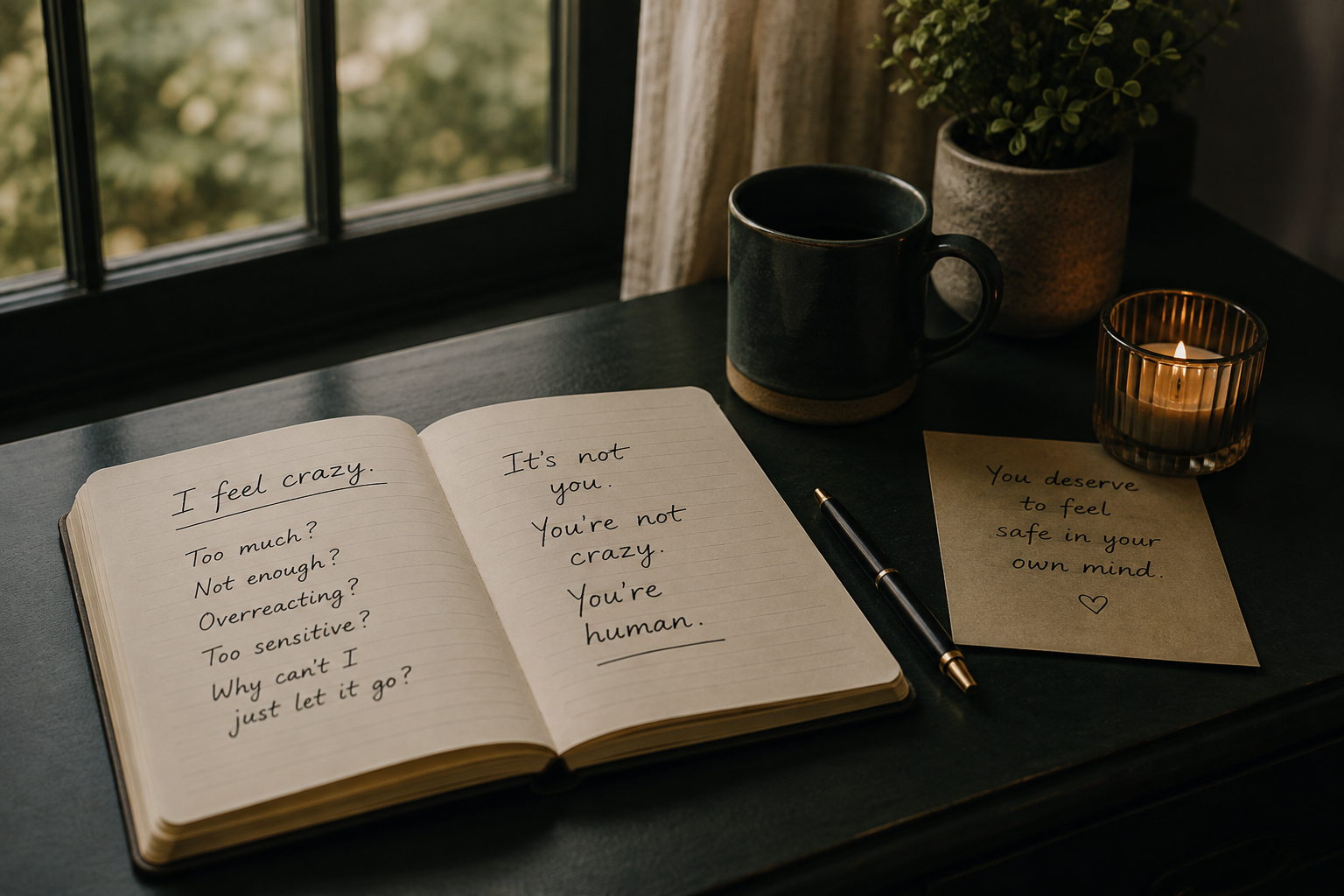
Why Do I Feel Crazy After Arguments?
A gentle place to begin when conflict leaves you foggy or ashamed.
Read the guide →
12 Belittling Behavior Relationship Examples
Examples that can help you notice when repeated comments make you feel smaller.
Read the guide →