The Recovery Room
Why Do I Miss My Abusive Ex?
Missing someone who hurt you can feel confusing and shameful. It does not erase what happened, and it does not mean you have to go back.

You may know the relationship hurt you. You may remember the fear, the confusion, the way you began to manage another person's moods, or the relief of finally getting away. And then, out of nowhere, you miss them. You miss their voice, the shared jokes, the house, the plans you made, or the version of them who could be tender after a hard day.
That contradiction can make you doubt yourself. It can feel as though missing them proves the relationship was not really that bad, or that leaving was a mistake. It does not. Missing someone who hurt you is not permission for the harm. It is a human response to losing a relationship that held real attachment, routines, hopes, and moments of closeness alongside the parts that were unsafe or painful.
You do not have to use the feeling as evidence for a decision. You can let it be a feeling, then return to the whole story.
You may be missing more than one thing
When someone says, “I miss my abusive ex,” they are not always saying, “I want the harm back.” They may miss being known by someone, the rhythm of daily life, a pet, a shared home, a social circle, financial stability, or the future they thought was coming. They may miss the version of themselves who still believed the relationship could become safe.
The good moments can be real memories. The care you felt can be real too. Naming that does not require you to minimize the other parts. Two things can sit beside each other: there were moments you valued, and the relationship harmed you or made you feel less free to be yourself.
If the ending was sudden, that pull can be even sharper. A cold or confusing ending often leaves the mind searching for an explanation. It can keep replaying the kindest memory because that memory feels easier to hold than the fact that someone you loved also treated you badly.
The cycle can make relief feel like connection
In an unstable relationship, a warm message after silence, an apology after blame, or a peaceful weekend after conflict can bring enormous relief. The relief is real. But relief is not the same thing as lasting safety.
Over time, your mind may start waiting for the next good moment. You may learn to scan for changes in tone, explain yourself carefully, or work very hard to keep the peace. When the relationship ends, you are not only grieving the person. You may be grieving the relief, the hope, and the familiar rhythm your body learned to look for.
This pattern is often called intermittent reinforcement. It is one reason the pull can feel so strong even when you understand what happened. Quinn's guide to resisting intermittent reinforcement explains how to create a little space between a moment of warmth and the decision you make because of it.

Missing them does not erase the pattern
Longing tends to narrow the picture. A song, a familiar road, a birthday, a quiet evening, or seeing something they would have laughed at can bring forward one tender memory. The parts where you felt afraid, silenced, blamed, watched, or exhausted may feel farther away in that moment.
When that happens, try not to argue with yourself for missing them. Instead, gently widen the frame. Ask: What was I regularly carrying in that relationship? What happened when I had a need, said no, saw a friend, or disagreed? Did I feel more like myself over time, or less?
A private note can help, if it is safe for you to keep one. Write down a few facts you do not want to have to reconstruct later: what happened, how you felt afterward, what you asked for, and what changed or did not change. The point is not to build a case against someone. It is to give your future self access to the whole picture when one memory takes over.
If your experience included repeated dismissal or a sense that every concern became your fault, these examples of blame shifting may help you name the shape of those conversations. Clearer language can make it easier to trust what you already noticed.
Grief is not a vote to go back
Grief after an abusive relationship can be complicated because you may be grieving someone who also caused harm. You may grieve what you hoped they would become. You may grieve the family, home, plans, or ordinary moments you wanted. You may grieve the time and energy you spent trying to make the relationship work.
You do not need to decide whether every good moment was false before you are allowed to take your pain seriously. The more useful question is not, “Was any of it real?” It is, “What did this relationship repeatedly ask me to give up?” Your sleep, friendships, privacy, money, confidence, peace, or ability to speak honestly all matter.
A relationship does not have to be bad every minute for a pattern to hurt you. You can miss a person and still choose not to return to a situation that left you smaller, anxious, or unsafe.
What can help when the pull is strongest
Try to make the next few minutes smaller. You do not have to solve the entire relationship or make a permanent decision while you are in the middle of a wave of longing.
- Pause before you send a message, if pausing is safe.
- Read a note you wrote when things were clear, or tell one steady person, “I am missing them today and I need help remembering the whole picture.”
- Write what you wish you could say without sending it.
- Do one ordinary thing that belongs to you: shower, eat, walk, call a friend, or return to a routine.
- Mute a social feed or put away a photo if seeing it keeps reopening the same wound.
These are not rules you have to perform perfectly. They are ways to create a pause, so one difficult feeling does not have to make every choice. If contact is necessary because of children, housing, work, or shared responsibilities, keeping messages brief and factual may help where it is safe. The grey rock guide offers language for exchanges that keep pulling you into blame or circular arguments.

When safety needs to lead
If you are frightened of how an ex may respond, are being monitored, have received threats, or feel at risk of retaliation, you do not have to announce your distance or explain yourself perfectly. Your safety comes first. The National Domestic Violence Hotline's overview of emotional abuse can help you identify patterns of control, and its advocates offer confidential support options.
People who have lived through coercion often feel responsible for the person who hurt them, especially when apologies, crises, or promises arrive after a rupture. DomesticShelters' survivor-informed guidance on feeling connected to an abuser describes how complicated that attachment can be. You do not have to carry someone else's wellbeing at the cost of your own.
If you are in immediate danger, contact emergency services when it is safe to do so. If you are not ready to reach out, you can still take the fear seriously and make a quiet plan around the next thing that helps you feel safer.
How Quinn's tools can support the in-between
Missing someone does not mean you have to rush yourself into being over it. Sometimes the next helpful step is simply having a private place to return to your own experience. Quinn's Focused Reflections workbook offers guided prompts for sorting through patterns and feelings one piece at a time. My Clarity Journal can also help you hold onto the details that matter when self-doubt gets loud.
You are allowed to miss what you wished the relationship could be. You are allowed to feel sad, angry, relieved, lonely, and uncertain, sometimes all in the same day. None of those feelings changes the basic truth: you deserve a relationship where care does not come with fear, confusion, or the cost of losing yourself.
Frequently asked questions
You can feel the pull without letting it make the decision.
Is it normal to miss someone who abused you?
Yes. You can miss a person, shared routines, good moments, a home, a hoped-for future, or the relief that came after hard moments. Missing any of those things does not make the harm acceptable and does not mean you were wrong to create distance.
Does missing my abusive ex mean I still love them?
It may mean you still have feelings, but feelings do not have to decide what you do next. You can care about someone, grieve what you wanted the relationship to be, and still choose what protects your safety, peace, and ability to be yourself.
What can I do when I want to contact them?
If contact is not required and it feels safe, give yourself a pause before acting. Read a note about why you left, message someone steady, step outside, or write what you wish you could say without sending it. If contact is necessary because of children, housing, work, or other shared responsibilities, keep the exchange factual and consider getting support around a safer plan.
What if I am worried they will react badly if I pull away?
Your safety comes first. You do not owe anyone a confrontation, an announcement, or a perfectly explained boundary. A confidential advocate can help you think through options that fit your circumstances, especially if there are threats, monitoring, stalking, financial control, or fear of retaliation.
Keep reading
More support for returning to your own perspective.

Trauma Bond Withdrawal Symptoms: What You May Feel
A compassionate look at the pull that can remain after you step back.
Read the guide →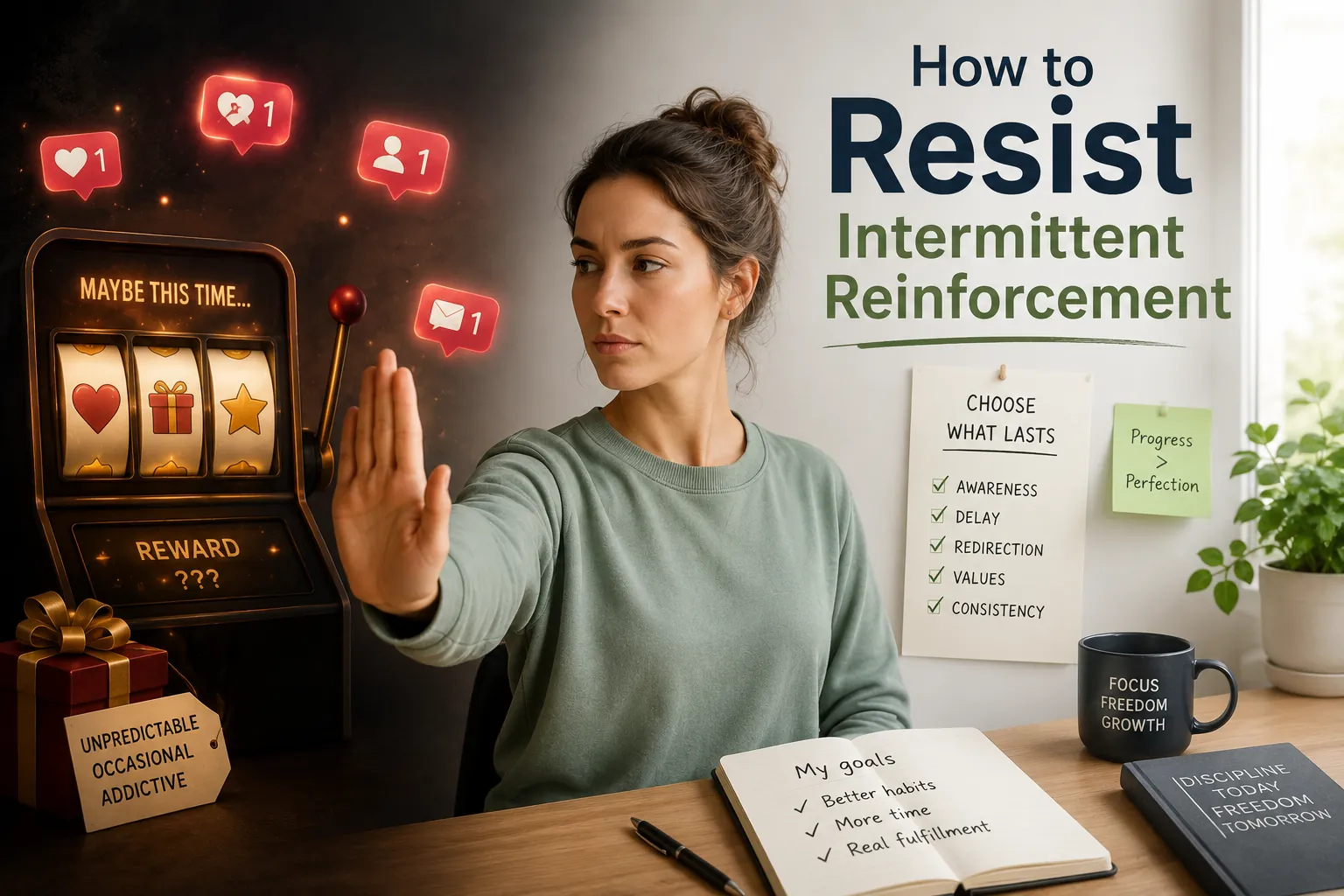
How to Resist Intermittent Reinforcement
A gentle guide to creating space between a warm moment and your next decision.
Read the guide →
Narcissistic Discard: What to Notice and What to Do
A calm place to start after a sudden, cold, or confusing ending.
Read the guide →Atmospheric photography by Jahanzeb Ahsan, Christian Ladewig, and Michael Pointner on Unsplash.