Symptoms of Emotional Abuse in Women: What to Notice
Emotional abuse can leave you anxious, smaller, and unsure of your own perspective. Here are patterns worth noticing, without pressure to decide today.

Emotional abuse does not always announce itself as one obvious event. It can show up in a slow change in how you move through your days. You may start checking a text before you send it, rehearsing a simple question, avoiding a friend, or wondering whether your memory is as unreliable as someone says it is. You may feel anxious without being able to point to one thing that “counts.”
That uncertainty can be part of what makes a harmful relationship hard to name. A person may also be funny, generous, apologetic, or loving. The good moments can be real to you. They do not cancel the moments that leave you smaller, afraid, isolated, or unsure of your own perspective.
This is not a checklist for proving anything. It is a place to notice patterns and their impact on you. You do not have to decide what to call your relationship, confront anyone, or make a big decision today in order to take what you are feeling seriously.
What emotional abuse can look like
Emotional abuse is not limited to name-calling or shouting. The National Domestic Violence Hotline describes emotional abuse as non-physical behavior meant to control, isolate, or frighten someone. It can include threats, humiliation, constant criticism, monitoring, jealousy, manipulation, dismissal, and intimidation.
The Office on Women’s Health also includes behavior such as demanding passwords, tracking every movement, discouraging contact with friends or family, controlling money, making everyday choices for someone else, and blaming a partner for an abusive outburst among signs of abuse in a close relationship.
Not every painful relationship is abusive. Stress, conflict, and mistakes can happen in relationships where both people can speak honestly, repair harm, and keep their freedom. What matters is the pattern: Is one person gaining more control while the other person has less room to speak, choose, connect, rest, or trust what she knows?
You may feel like you are always managing the atmosphere
One common symptom is constant bracing. You may pay close attention to a partner’s tone, face, footsteps, or silence. You may change your plans because you can already imagine the reaction. You may explain ordinary choices in advance, apologize before you know what you did wrong, or feel your body tighten when their name appears on your phone.
Consideration in a relationship is normal. Fear-driven management is different. If you feel responsible for keeping someone else calm, preventing every disappointment, or absorbing every mood, it is worth noticing how little room is left for your own needs.
Sometimes this is described as walking on eggshells. The phrase can sound small, but living that way can make ordinary life feel exhausting. You may become so focused on avoiding the next reaction that you lose touch with what you wanted to say or do in the first place.

You may doubt your memory, feelings, or right to be hurt
When a concern is repeatedly denied, minimized, or turned back on you, you may begin to question your own reality. Perhaps you remember a promise, a cruel comment, or a frightening argument, but you are told it never happened, you misunderstood, you are too sensitive, or you are making a big deal out of nothing.
Disagreement is not automatically gaslighting. People can remember events differently. The issue is whether there is room for your experience. Can you say, “That hurt me,” without being mocked, punished, or made to defend your right to feel it? Can someone take responsibility for the impact of their behavior, even when they did not intend it?
If every conversation leaves you apologizing for raising it, the subject may be shifting away from what happened. These examples of blame shifting can help you recognize the difference between a difficult discussion and a pattern that keeps making your perspective disappear.
You may feel increasingly cut off from other people
Isolation does not always look like a direct order to stop seeing someone. It can be a partner who starts an argument before every visit, acts wounded when you make plans, texts constantly while you are out, criticizes the people who care about you, or makes being with anyone else feel like a betrayal.
Over time, it may seem easier to cancel than to deal with the aftermath. You may stop mentioning people you love. You may begin to believe that no one would understand, that you would embarrass yourself by telling them, or that you are somehow the problem. Those thoughts can make the relationship feel like the only place you can go, even when it is also the place you feel least like yourself.
A supportive relationship makes room for your friendships, family, work, interests, and private thoughts. It does not require you to shrink your world so that one person can feel in control of it.
You may be carrying guilt that does not belong to you
Many women describe becoming the person who smooths everything over. You might feel guilty for saying no, needing rest, spending money, seeing a friend, asking a question, or wanting a conversation to end. You may hear that your needs are selfish while the other person’s needs are treated as emergencies.
Guilt can be useful when it points to something we want to repair. It becomes confusing when it is used to keep you compliant. Ask yourself: Is there space for both people’s needs here? Can I disagree without being punished? Do I feel free to change my mind, or do I have to manage someone else’s reaction to it?
If boundaries bring immediate self-doubt, this guide on feeling guilty after setting boundaries may offer a quieter place to start. A boundary is not a demand that another person agree with you. It is information about what you need in order to stay connected to yourself.

You may feel smaller in places where you once felt like yourself
Emotional abuse can slowly affect confidence without leaving one neat symptom. You might stop sharing an opinion because it will be picked apart. You might lose interest in things you loved because there is always a criticism waiting. You may feel less capable at work, more hesitant around friends, or embarrassed by ordinary decisions you once made easily.
Repeated put-downs, contempt, jokes at your expense, and criticism of your appearance or intelligence can wear down your sense of self over time. The effect may not look dramatic from the outside. Inside, it can feel like forgetting that your own voice has weight.
This is one reason it can be helpful to look beyond a single incident. When you think about the last few months, do you feel more free, supported, and able to be yourself? Or more watchful, isolated, and unsure? Your answer does not have to prove anything to anyone else. It can simply be information you are allowed to keep.
You may feel worn down without knowing how to explain why
Living with tension can take up a great deal of energy. You may have trouble concentrating, feel restless, lose sleep, or find yourself replaying conversations long after they end. You might feel depleted after ordinary contact with your partner, then wonder why you are so tired when there was no visible fight.
Those experiences can have many causes, and they do not by themselves tell you what is happening in a relationship. But they are still worth caring about. A useful question is not, “Can I prove this feeling came from them?” It may be, “What happens to my body and my sense of calm around this pattern?”
If you have new or concerning physical or mental-health symptoms, a qualified health professional can help you care for them. You do not need to solve the relationship before you ask for support. You can simply say that you have been under stress, feel anxious or exhausted, and want help thinking about what you need.
Affection after hurt can make the pattern more confusing
A partner may become especially loving after an argument, a threat, a betrayal, or a period of coldness. They may apologize, promise change, bring gifts, share a tender memory, or become the person you hoped they would be. The relief that follows can feel powerful, especially when you have been tense for days or weeks.
Hope is not foolish. It is human to want repair and to believe someone you love. The question is not whether an apology sounded emotional. It is whether the pattern changes over time. Can they hear your hurt without punishing you? Do they take responsibility without making you the cause? Does your life become more open and safe, or do you keep returning to the same fear?
Quinn’s guide to the emotional abuse cycle explores how tension, harm, relief, and renewed hope can become tangled together. Seeing that pattern does not tell you what choice to make. It can simply help you stop measuring the relationship by its warmest moment alone.
What can help you see the pattern more clearly
Clarity does not have to begin with a confrontation. In some situations, confronting a controlling person or announcing that you are leaving can make things less safe. Your safety, privacy, finances, housing, children, health, immigration status, and access to support all matter. You are the person who knows the risks around you best.
If it is safe, try writing down a few facts before you explain them away: what happened, what was said, how you felt afterward, and what happened when you named a need. A short private note can help you return to the whole picture after someone insists that nothing happened. Keep it only where it will not put you at risk.
You might also choose one steady person and say something simple: “I have been feeling confused in my relationship, and I need someone to listen.” You do not need a perfect story or a label to deserve support. If you are worried about monitoring, retaliation, threats, or an escalation in harm, prioritize a safer way to reach out. The National Domestic Violence Hotline offers confidential support and safety-planning options.
A private way back to your own perspective
When someone has repeatedly questioned your experience, self-trust rarely returns because another person tells you to be confident. It returns in small moments: noticing what you feel, letting it matter, and making room for what you know. You are allowed to take your own discomfort seriously before you have every answer.
Quinn’s My Clarity Journal was made for that kind of private pattern-noticing. It gives you a place for facts, feelings, and the questions you are still carrying. The Focused Reflections workbook can also help you slow down and look at one part of the experience at a time.
You do not have to turn your life upside down because a few signs feel familiar. You can begin with one honest sentence: “Something about this has been hurting me.” That sentence is not a verdict. It is a way of making space for your perspective again.
Frequently asked questions
Your experience deserves room to be taken seriously.
What are emotional abuse symptoms in women?
They can include feeling constantly anxious about a partner’s reaction, second-guessing your memory, apologizing to keep peace, pulling away from people you trust, or feeling less free to make ordinary choices. These feelings alone cannot diagnose a relationship, but they can be useful information about its impact on you.
Can emotional abuse happen without yelling or physical violence?
Yes. Emotional abuse can include control, isolation, intimidation, humiliation, constant criticism, monitoring, threats, or repeated denial of your experience. A pattern can be harmful even when it is quiet or mixed with affectionate moments.
What should I do if some of these signs feel familiar?
You do not have to confront anyone or make a decision immediately. If it is safe, begin with one private step, such as writing down what happened, telling a steady person how you have been feeling, or speaking confidentially with an advocate. If you feel watched, threatened, or frightened of a reaction, put safety and privacy first.
Does feeling confused mean I am overreacting?
No. Confusion is not proof that you are wrong. When conversations repeatedly leave you defending your memory, your feelings, or your right to have a need, it can be hard to trust yourself. You deserve time and support to look at the whole pattern.
Keep reading
More language for what you are noticing.
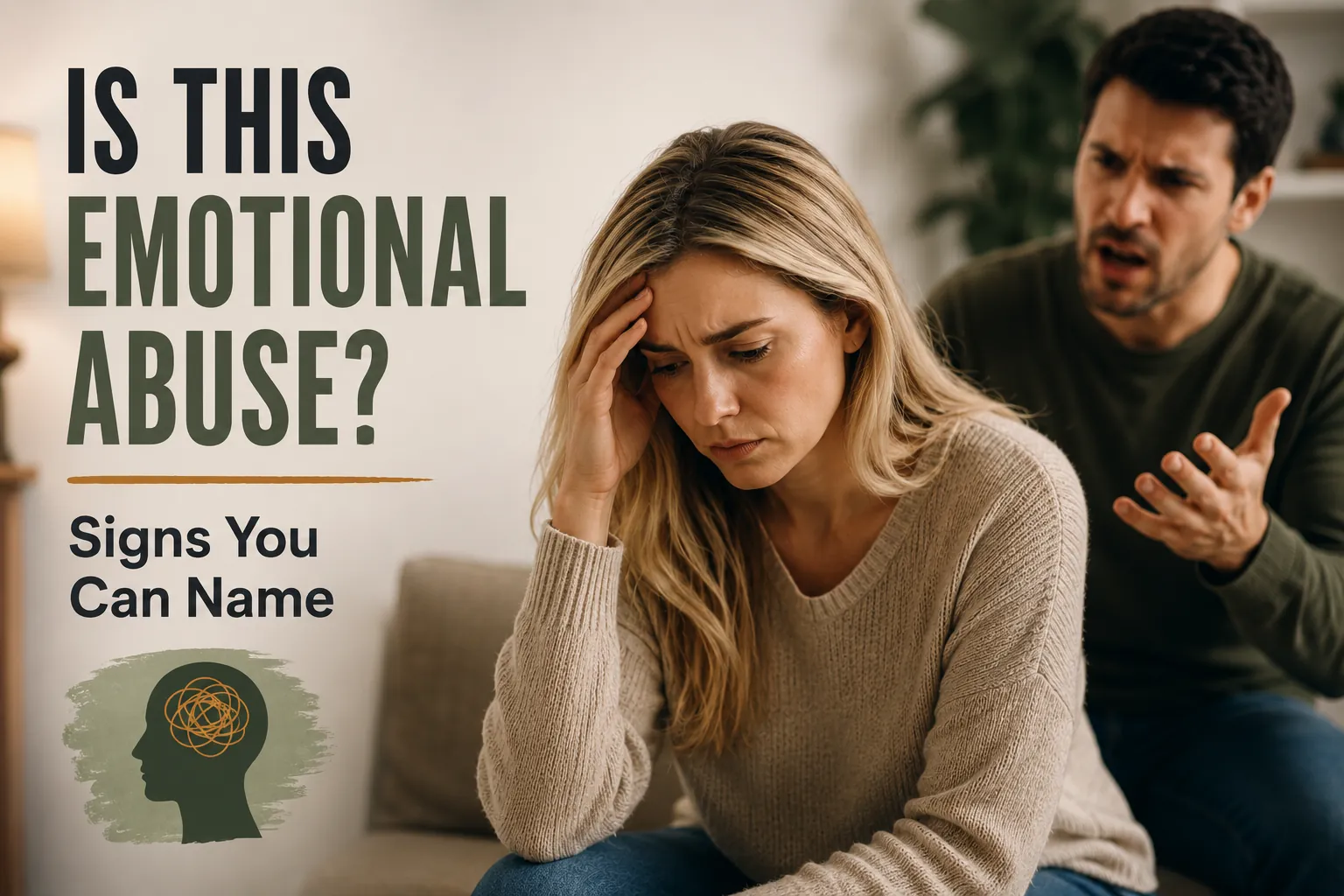
Is This Emotional Abuse? Signs You Can Name
A gentle guide to noticing patterns of control, blame, isolation, and fear.
Read the guide →
Emotional Invalidation in Relationships
Notice when your feelings keep being dismissed or turned back on you.
Read the guide →
The Emotional Abuse Cycle
How harm, relief, and renewed hope can make a pattern hard to see.
Read the guide →Atmospheric photography by Jahanzeb Ahsan, Christian Ladewig, and Sam Sunil on Unsplash.