The Recovery Room
Love Bombing vs. Genuine Affection: What to Notice
Love bombing and genuine affection can look similar at first. The difference often becomes clearer when you notice pace, pressure, and room for your own life.

At first, it may feel like a rare kind of relief. Someone is attentive, affectionate, and certain about you. They call constantly, send long messages, want to see you every day, talk about the future early, and seem to understand exactly what you have been longing to hear. You may feel chosen in a way you have not felt for a long time.
Then a small part of you starts to feel crowded. The attention becomes hard to step away from. A night with friends becomes a problem. A slower reply brings disappointment. A request for space turns into a question about whether you care at all. What felt flattering begins to feel like something you have to manage.
That shift is why love bombing vs. genuine affection can be so hard to sort out. Early attraction can be exciting. Real care can be generous. A strong beginning is not automatically a warning sign. The difference often becomes clearer over time, especially when you notice whether affection makes more room for your life or quietly asks you to give parts of it up.
What people mean when they say love bombing
Love bombing is a phrase used for intense affection, attention, gifts, praise, contact, or future promises that create a powerful sense of closeness very quickly. On its own, no single gesture proves anything. People can be expressive. They can fall hard. They can be excited to know you.
The concern is not whether someone buys flowers, writes a sweet message, or says they miss you. The concern is whether that intensity begins to create pressure, obligation, or control. The National Domestic Violence Hotline describes signs of love bombing as excessive attention and admiration that can make it harder to recognize unhealthy behavior when it appears later.
Sometimes the pattern feels like a rush toward closeness before there has been enough time for trust to grow naturally. You may be told you are soulmates after a few dates, asked to make major changes quickly, or made to feel that slowing down would disappoint someone who has already given you so much. The affection can be real in the moment. The question is whether it stays respectful when you need your own pace.
Genuine affection leaves room for you
Genuine affection does not have to be quiet or restrained. It can be warm, romantic, playful, eager, and deeply caring. The difference is that it does not need to take over your whole life to be convincing. It lets you remain connected to yourself while the relationship grows.
A caring person may be excited to see you, and still understand that you have work, friends, family, rest, interests, and private thoughts that belong to you. They may feel disappointed if a plan changes, but they do not turn that disappointment into a punishment. They can hear a no without making you responsible for repairing their feelings.
Healthy affection also gets more real over time. It is not only grand words when everything is easy. It shows up in ordinary moments: listening when you disagree, respecting a changed plan, taking responsibility after a mistake, and remaining kind when you are not immediately available. The relationship does not require you to prove your love by becoming less yourself.

Notice the pace, not only the romance
One useful thing to notice is pace. Are you being given room to learn who this person is, or are you being swept toward a level of closeness you are not ready for? Intensity can make a relationship feel meaningful very quickly, but urgency is not the same as trust.
Love bombing may sound like: “I have never felt this way before, so we should not waste time.” “No one has ever understood me like you do.” “Why would you need your friends when you have me?” “If you loved me, you would want to spend every minute together.” The words may be wrapped in romance, but they can make slowing down feel cruel or disloyal.
Genuine affection can tolerate a slower answer. It makes plans, but it does not demand a future before you have had time to see the present clearly. It does not require you to merge your routines, finances, home, passwords, social life, or emotional world on a schedule that only works for the other person.
You do not have to decide whether someone is good or bad because the relationship moved quickly. You can simply ask: Do I have room to think? Do I feel free to move at my own pace? Can I take one step back without fearing that I will lose all their warmth?
What happens when you say no can tell you more
It is often easier to see the pattern after a boundary. You may say you need a quiet night, want to keep an existing plan, prefer not to share your location, or are not ready to use a big relationship label. A respectful person may have feelings about that, but they can still make room for your answer.
Pressure can look more subtle. Perhaps they say they understand, then become cold. Perhaps they bring up every kind thing they have done for you. Perhaps they tell you their past hurt means you owe them constant reassurance. Perhaps your no becomes a long conversation until you are exhausted enough to take it back.
Love is not proven by how much access someone can get to you. A relationship can include closeness without requiring constant availability. When you find yourself rehearsing how to decline something without triggering anger, sadness, guilt, or a dramatic breakup threat, it may be worth paying attention to the space your needs are being given.
The guide Why Do I Feel Guilty After Setting Boundaries? can help when a reasonable limit begins to feel like evidence that you have done something wrong.
Affection should not become a debt you have to repay
Generosity becomes confusing when it quietly creates a bill. A person may give gifts, praise, time, travel, money, or emotional attention, then use those things to make your choices feel selfish. You may hear, “After everything I have done for you,” or feel that you must answer, agree, stay, or give more than you want because they have already been so loving.
Real care is freely offered. It does not become leverage when you need a boundary. You are allowed to accept kindness without surrendering your right to privacy, friendship, time, money, body, or opinions. Someone can feel hurt by a choice you make without that hurt becoming a reason you must abandon yourself.
It may help to separate gratitude from obligation. You can be grateful that someone cared for you and still decide something does not feel right. You can appreciate a gift and still decline a request. You can remember the beautiful parts of a relationship while noticing that the cost of keeping them became too high.

Look for the whole pattern, not one perfect label
A single grand gesture does not tell you everything. Neither does one argument, one disappointing reaction, or one moment of insecurity. What matters is the pattern that forms over time. Do you feel more settled and more like yourself, or more watchful and responsible for keeping the connection stable?
Try noticing a few details without forcing a conclusion:
- Can you take time for your own friends, routines, and interests without being punished for it?
- Can you disagree without being mocked, guilted, ignored, or made to feel cruel?
- Does affection stay kind when you are tired, busy, or unable to give what they want?
- Are promises matched by steady behavior, not only intense words?
- Do you feel freer to be honest, or more careful about saying the wrong thing?
The answers may not all be clear at once. That is okay. You do not have to build a case or use the right label before you are allowed to take your discomfort seriously. The point is not to inspect every good moment for a hidden motive. It is to notice whether the relationship gives you room to have a self inside it.
When intensity turns into control
Sometimes early intensity is followed by more obvious control. The person may discourage time with people who care about you, expect access to your phone or accounts, question your clothes or money, move too quickly toward shared commitments, or make you feel guilty for needing privacy. They may be affectionate after upsetting you, then return to pressure once the immediate conflict is over.
That cycle can be disorienting because the good moments are often exactly what makes you doubt the bad ones. You may think, “They are so loving when things are good,” or, “Maybe I caused the change by needing too much.” But affection does not cancel behavior that makes you smaller, more isolated, or afraid to be honest.
If closeness has started to include monitoring, pressure, fear, or loss of privacy, Digital Abuse in Relationships offers a clearer look at what to notice. You are not required to confront anyone or announce a decision before you have a safer next step.

Give yourself enough time to hear your own voice
When someone is very persuasive, affectionate, or certain, it can be hard to know what you think apart from what they want. A little space can help. Keep one plan that belongs to you. Talk with someone who knew you before the relationship. Let yourself sleep on a decision. Notice how you feel after contact, not only while you are receiving attention.
Writing down a few details can be useful when your feelings change quickly. You might note what was said, what you wanted, how the person responded, and how you felt afterward. This is not about proving anything to anyone. It is a private way to make room for the parts of the story that can disappear when someone is being especially sweet or especially upset.
For a more structured private reflection, the Emotional Abuse Worksheets offer prompts for naming patterns, impact, and the questions you want to return to. You do not need to decide what the relationship means today. You can start with the simpler truth: your pace, your privacy, and your feelings deserve a place in it.
If you feel afraid, put safety before clarity
If attention has become threats, stalking, monitoring, pressure to isolate, fear of retaliation, or concern about what will happen when you pull away, safety matters more than having the perfect conversation. You may not need to explain a boundary out loud. A quiet plan, a safer device, or confidential support may be more important.
love is respect offers a guide to signs of love bombing for young people and their supporters. The National Domestic Violence Hotline has confidential support options in the United States when it is safe to reach out. If you are in immediate danger, call 911 or local emergency services when it is safe to do so.
You do not have to prove that the relationship was bad enough before you deserve care. You can take the part of you that feels crowded, rushed, or afraid seriously now.
Frequently asked questions
Affection should make room for you, not erase you.
Is love bombing always intentional?
You may never know exactly what another person intended, and you do not need to solve that question before taking your own experience seriously. What matters is the pattern: whether intense attention is followed by pressure, punishment, control, or a loss of room for your needs and choices.
Can someone be affectionate without love bombing?
Yes. Healthy affection can be enthusiastic, generous, romantic, and emotionally open. It still leaves room for your pace, your friendships, your privacy, your no, and the ordinary parts of getting to know each other over time.
What if the relationship felt good at the beginning?
Good memories can be real. Noticing a harmful pattern later does not require you to call every kind moment fake. You are allowed to look at the whole relationship, including what happened when you slowed down, disagreed, needed space, or stopped giving the other person what they wanted.
What should I do if I think I am being love bombed?
Give yourself time. Keep contact with people and routines that help you feel like yourself, notice how the person responds to a boundary, and write down patterns if that feels safe. If attention has become pressure, fear, monitoring, or threats, confidential support can help you think through the safest next step.
Keep reading
More language for trusting what you notice.
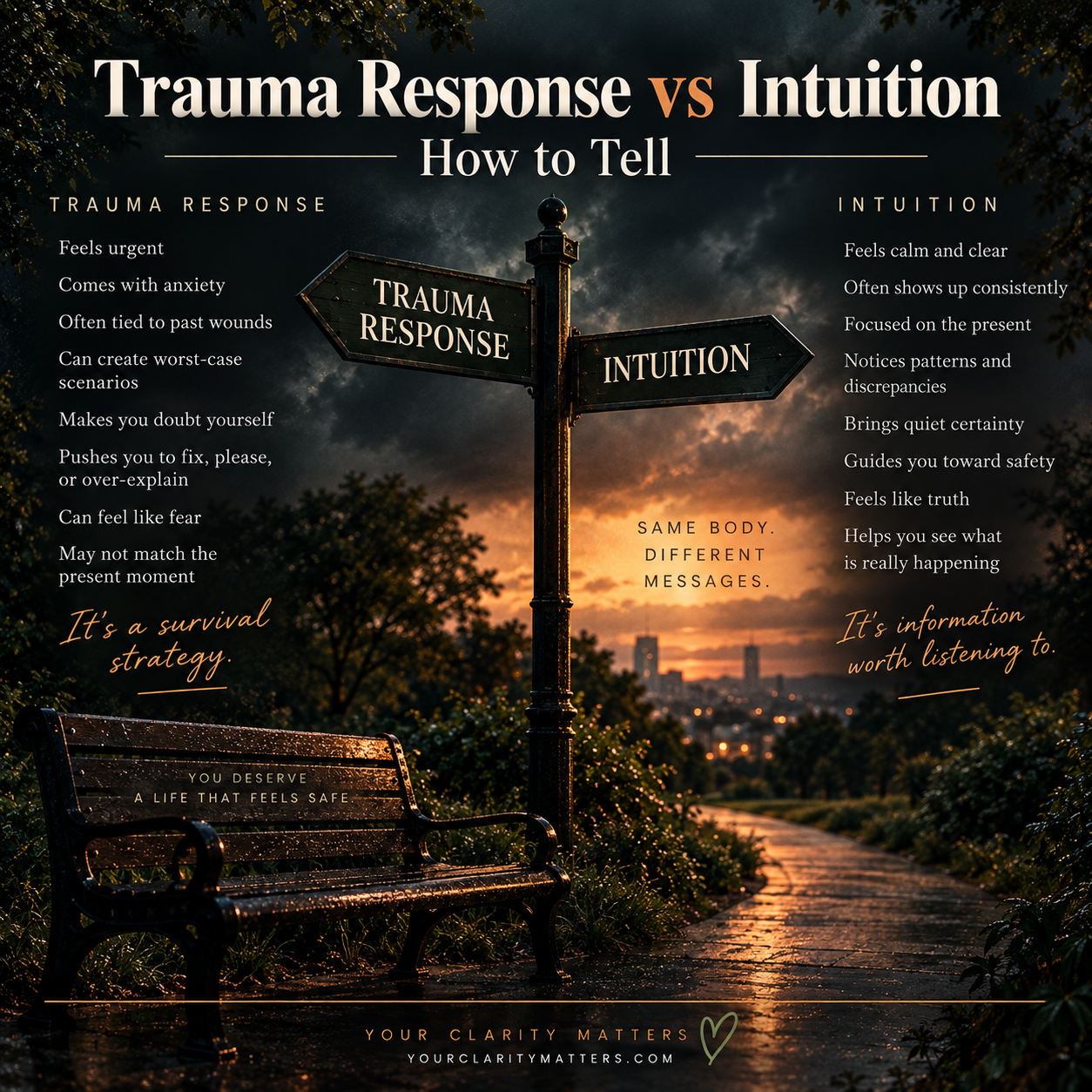
Trauma Response vs. Intuition: How to Tell
A gentle way to give your feelings and present-day details room to exist together.
Read the guide →
A Guide to Trauma Bond Recovery
A quieter place to begin when care and harm have become tangled together.
Read the guide →
Why Do I Feel Guilty After Setting Boundaries?
When a reasonable limit feels unbearable, look at what the guilt may be asking you to carry.
Read the guide →Atmospheric photography from Unsplash.